
What California wildfires actually cost
Suppression budgets, insured losses, insurance markets in retreat — the bill for California wildfires keeps growing. Here are the real numbers, and why prevention is the cheapest line item.
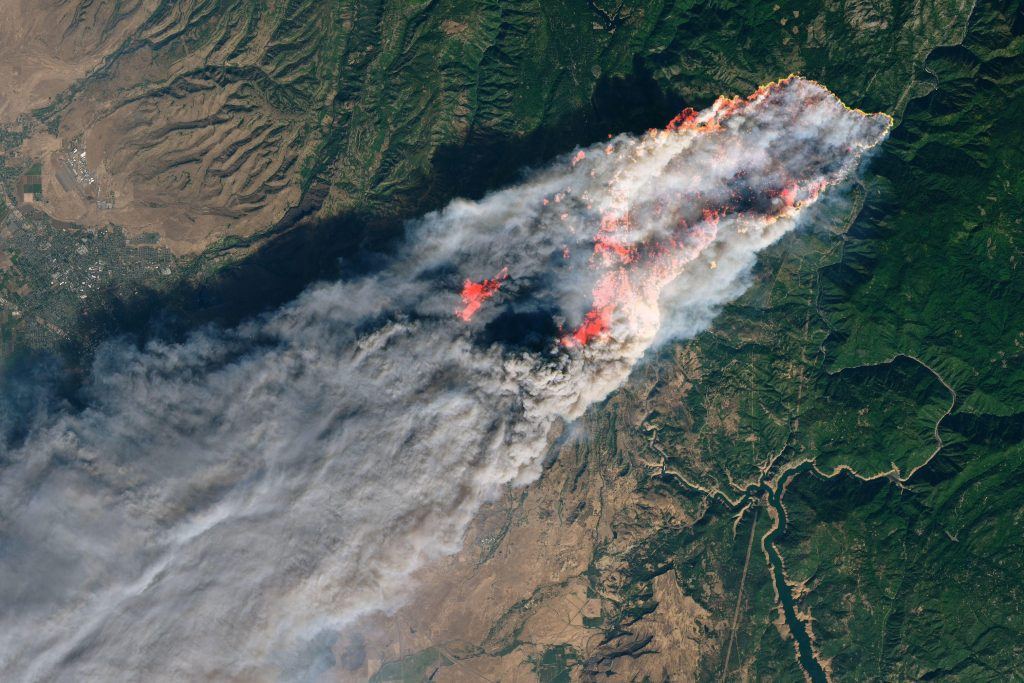
Wildfire costs are usually reported one fire at a time, which hides the real picture. Add up suppression, insured losses, uninsured losses, health impacts, and the slow-motion collapse of the insurance market, and fire is one of the largest recurring economic events in California. Here's the honest accounting — and why the cheapest line item in the whole system is the one that happens before ignition.
The headline numbers
The January 2025 Los Angeles fires — Palisades and Eaton chief among them — burned over 37,000 acres, destroyed more than 16,000 structures, and killed 29 people. Catastrophe modelers put insured losses at roughly $28–35 billion, making them among the costliest insured wildfire events in world history. UCLA Anderson economists estimated total economic losses, including long-term and uninsured damages, could exceed $250 billion.
And 2025 wasn't an anomaly so much as a peak. The 2018 Camp Fire produced roughly $16.5 billion in losses and erased the town of Paradise. The 2017 North Bay siege (Tubbs, Atlas, Nuns) topped $10 billion. CAL FIRE's suppression spending alone routinely runs well over a billion dollars per year — before a single home is rebuilt.
The costs nobody itemizes
Structure losses are just the visible layer. Underneath: smoke-related health costs across entire regions, weeks of lost business activity, watershed and erosion damage that plays out over years, evacuation and sheltering costs, and rebuilding inflation that raises construction prices statewide. Studies of large fires consistently find total economic impact runs several multiples of the insured figure.
The insurance market is the transmission mechanism
This is how fire costs reach people whose homes never burn. After repeated catastrophe years, major insurers paused or restricted new California homeowner policies, and hundreds of thousands of owners landed on the FAIR Plan — the state's insurer of last resort — at higher prices for thinner coverage. Premiums, non-renewals, and inspection requirements now track fire risk parcel by parcel. If your property carries visible fuel load, your insurer increasingly knows and prices it.
The economics in one sentence: fuel reduction costs hundreds to a few thousand dollars per acre; fires cost billions per event — and the insurance market has started billing homeowners for the difference in advance.
Prevention is the cheap part
Federal and state analyses have repeatedly found that pre-fire mitigation returns several dollars in avoided losses for every dollar spent. That's why California funds fuel breaks, why utilities clear corridors, and why defensible-space law keeps getting stricter: the state has done the math.
For an individual property, the same logic applies at small scale. Reducing the grass, brush, and ladder fuels around structures is the highest-leverage money a fire-country owner spends — it lowers the odds of loss, satisfies inspectors, and increasingly matters to insurers. On the steep, brushy terrain where mechanical clearing is most expensive, targeted grazing is often the cost-effective way to get it done.
The bottom line
California wildfire costs compound: suppression, losses, health, insurance. Every dollar of that chain traces back to fuel, weather, and ignition — and fuel is the only one of the three a property owner controls. Managing it isn't just fire safety anymore; it's financial self-defense.
Sources
- Verisk / Reinsurance News — Industry insured losses for the Los Angeles wildfires (Milliman roundup)
- UCLA Anderson Forecast — Economic impact of the Los Angeles wildfires
- Moody's — One year after the 2025 Los Angeles fires
- CAL FIRE — Wildfire statistics
- Claims Journal — LA wildfires by the numbers
Reduce your fuel load before fire season
Talk to a real person about your property and get a free estimate over the phone — we serve properties across California and generally require about a 5-acre minimum per project.
Call 1-858-751-GOATSee how it works