
What California actually requires: PRC 4291, Zone 0, and inspections
The 100-foot rule is law, inspections are getting stricter, and ember-resistant Zone 0 requirements are on the way. Here's what California property owners are actually required to do.
Defensible space in California stopped being advice a long time ago — it's law, it's inspected, and the requirements are tightening. Here's what property owners in fire-hazard zones are actually required to do, in plain English. (This is general information, not legal advice; requirements vary by jurisdiction, so confirm with your local fire authority.)
The foundation: PRC 4291's 100-foot rule
Public Resources Code section 4291 requires anyone who owns a building in a State Responsibility Area — and, through parallel law, in local very high fire hazard severity zones — to maintain defensible space of 100 feet around structures, or to the property line. In practice that means managing vegetation in two established zones:
- Zone 1 (0–30 ft): "lean, clean, and green" — remove all dead vegetation, keep grass short, create separation between plants, no ladder fuels under trees.
- Zone 2 (30–100 ft): reduced fuel — annual grass down to 4 inches or less, brush thinned so clumps are separated (more on slopes), spacing between tree crowns.
The new layer: Zone 0, the ember-resistant zone
Research from recent fires shows most homes ignite not from flames but from embers landing in the first five feet — in bark mulch, in shrubs against the wall, under the deck. AB 3074 (2020) added an "ember-resistant zone" (Zone 0, 0–5 ft) to state law, and the Board of Forestry has been writing the implementing rules since.
As of mid-2026 the statewide Zone 0 regulation is still being finalized — the Board released an updated draft in April 2026 after missing its end-of-2025 deadline — but the direction is clear: within 5 feet of structures in high-hazard zones, materials will need to be non-combustible or ember-resistant (gravel, pavers, hardscape rather than mulch and vegetation), with phased compliance expected first for new construction, then existing homes in very high hazard zones, then high hazard zones. Some insurers and local jurisdictions are effectively requiring Zone 0 practices already.
Translation: don't wait for the final regulation. Everything Zone 0 asks for is already best practice, already inspected informally, and already priced by insurers.
Inspections and enforcement
CAL FIRE inspects defensible space in State Responsibility Areas; city and county fire departments inspect in theirs, and enforcement has intensified as jurisdictions stand up inspection programs under recent legislation. A failed inspection typically brings a correction notice and a compliance window; continued non-compliance can mean fines and, in some jurisdictions, forced abatement with the bill sent to the owner. Separately, insurance companies now run their own inspections — and a lapsed defensible space can mean a non-renewal letter, which in today's market is often the more painful consequence.
Where fuel-reduction work fits
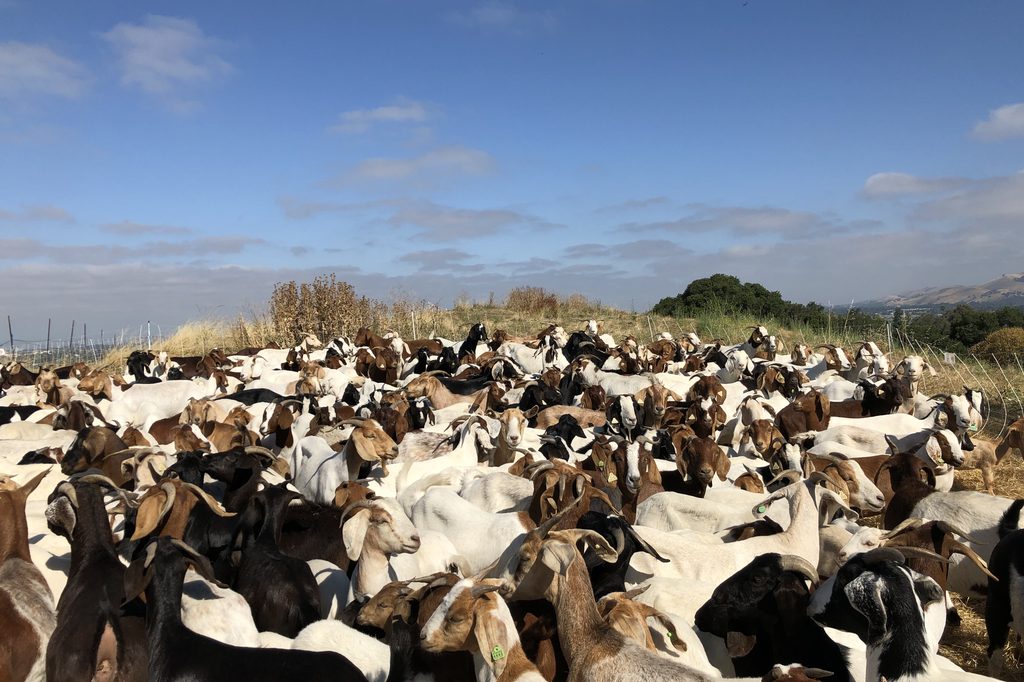
Zone 2 is where most of the acreage — and most of the cost — lives, especially on steep or brushy parcels where mowing is unsafe and hand crews are slow. That's the terrain targeted grazing handles best: goats take grass and brush down across large areas, including slopes machines can't work, with no spark risk during red-flag months. Grazing doesn't replace the structure-adjacent work in Zones 0 and 1 (that's on you or your landscaper), but it's often the most practical way to get and keep the outer 70 feet compliant.
Our free printable defensible-space checklist walks all three zones task by task.
The bottom line
100 feet of defensible space is required. Inspections are real and getting stricter. Zone 0 rules are coming, and insurers aren't waiting for them. The good news: it's all doable, most of it is annual maintenance, and the deadline that matters isn't the regulatory one — it's the first red-flag wind event of the season.
Sources
- California Public Resources Code — PRC § 4291 (defensible space)
- California Legislature — AB 1455: ember-resistant zone regulations
- Board of Forestry and Fire Protection — Draft Zone 0 rule text
- CAL FIRE — Defensible space guidance
Get your outer zones compliant
Talk to a real person about your property and get a free estimate over the phone — we serve properties across California and generally require about a 5-acre minimum per project.
Call 1-858-751-GOATSee how it works