Sheep grazing — for the land goats aren't built for
Yes, Rent A Goat rents sheep. Goats are browsers that demolish brush; sheep are grazers that mow grass low and even. We run both, and we'll tell you honestly which one your land needs — or send a mixed herd that handles everything.
Grazers vs. browsers: the honest difference
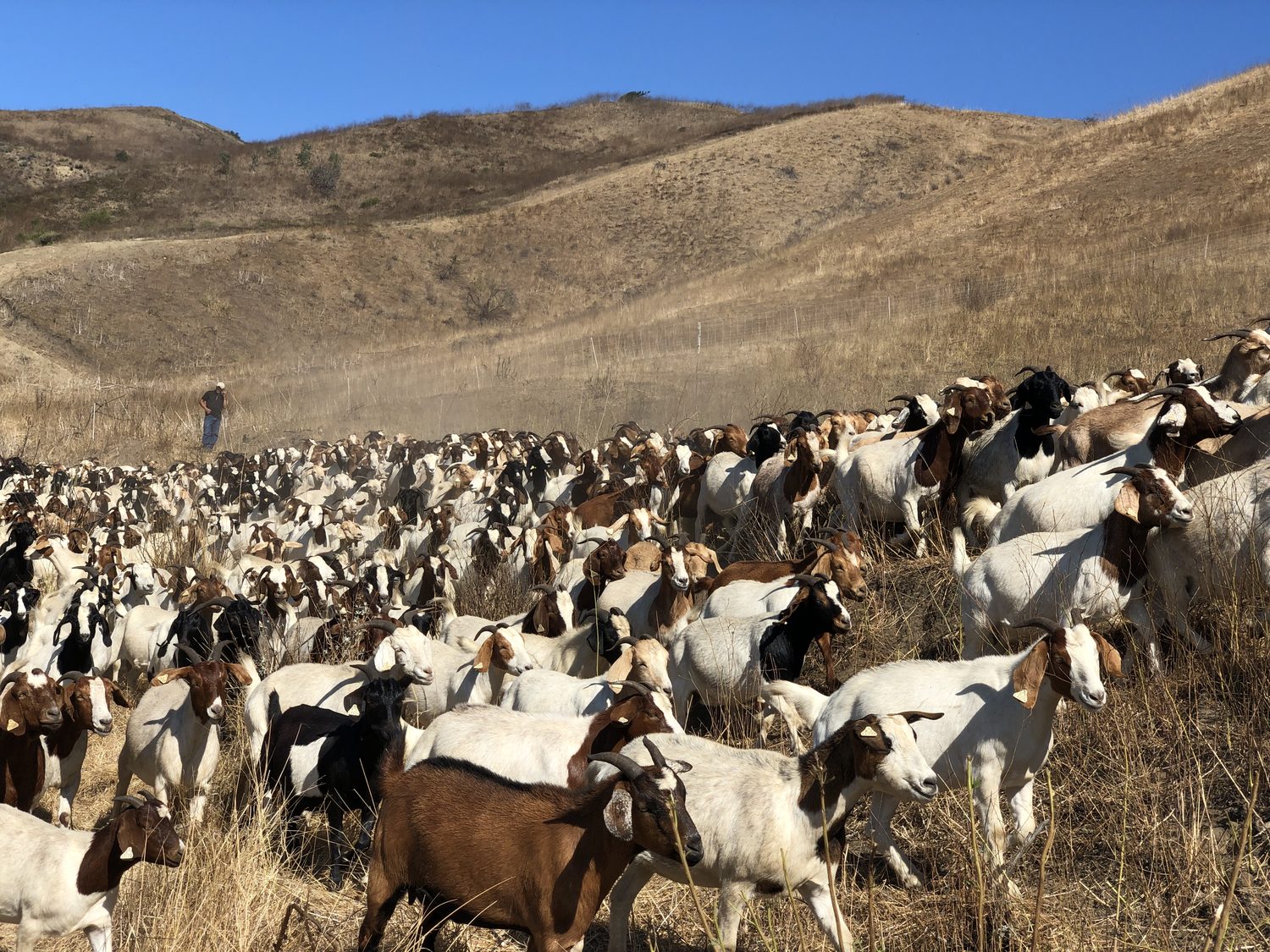
Sheep and goats look interchangeable from a distance and work completely differently up close. Sheep eat downward — grass, clover, and low broadleaf plants, cropped short and uniform across open ground. Goats eat upward — brush, vines, woody regrowth, and low branches, standing on hind legs to reach six feet. Send goats to a grassy field and they'll sulk and skim; send sheep into chaparral and they'll starve politely. The animal has to match the vegetation, which is why we ask for photos with every estimate.
Where sheep are the right call
- Grassy hillsides and open fields: sheep graze fine fuels — the fast-drying grasses that carry fire quickest — down to a low, even stubble.
- Vineyards and orchards: outside the growing season, sheep manage the rows without browsing vines or stripping bark the way goats would.
- Solar farms: sheep are the national standard for solar-site vegetation. Per the NREL/ASGA 2024 census, over 113,000 sheep grazed some 129,000 acres of U.S. solar sites — they maneuver under panels and don't chew on wiring or climb on equipment.
- Weed abatement on flat parcels: lots, easements, and field edges where the problem is grass and weeds, not brush.
And where goats still win
Brush, blackberry, poison oak, ladder fuels, steep rocky slopes — everything woody or vertical is goat territory. Plenty of California properties need both: a grassy meadow running into a brushy canyon edge is a classic mixed-herd job, and running sheep and goats together is common practice on our projects.
Same process, same crew
Sheep projects run exactly like our goat projects: temporary electric fencing, water, livestock guardian dogs, and herders who check the animals daily. Same process, same ~5-acre minimum, same free estimate — just a different (woollier) workforce.
Common questions
Do you rent sheep as well as goats?
Yes. We run both, and we match the animal to the vegetation. Goats are browsers that prefer brush, woody plants, and weeds; sheep are grazers that prefer grass and low forbs. Many projects use a mixed herd to cover both.
Are sheep or goats better for fire-fuel reduction?
It depends on the fuel. For grassy hillsides and fine fuels — the flashy fuels that carry fire fastest — sheep graze low and evenly and are often the better tool. For brush, chaparral, and ladder fuels, goats win. Mixed herds handle properties with both.
Why are sheep preferred for vineyards and solar farms?
Sheep keep their heads down. They graze grass and low vegetation without reaching up to strip bark, browse vines, or chew on wiring and equipment the way goats will. That makes them the standard choice under solar panels and, outside the growing season, between vine rows.
What does sheep grazing cost?
Pricing works the same as our goat projects: acreage, terrain, vegetation type, and access drive the estimate, with roughly a 5-acre minimum. Grass-heavy ground often grazes faster than dense brush, which helps the per-acre economics.
Not sure which animal your land needs? Send photos — we'll tell you.
Talk to a real person about your property and get a free estimate over the phone — we serve properties across California and generally require about a 5-acre minimum per project.
Call 1-858-751-GOATSee how it works