
Vegetation management for solar sites
The U.S. solar industry already runs on solar grazing — over 113,000 sheep across roughly 129,000 acres of arrays, per the NREL/American Solar Grazing Association census. Here's what it looks like on your site.
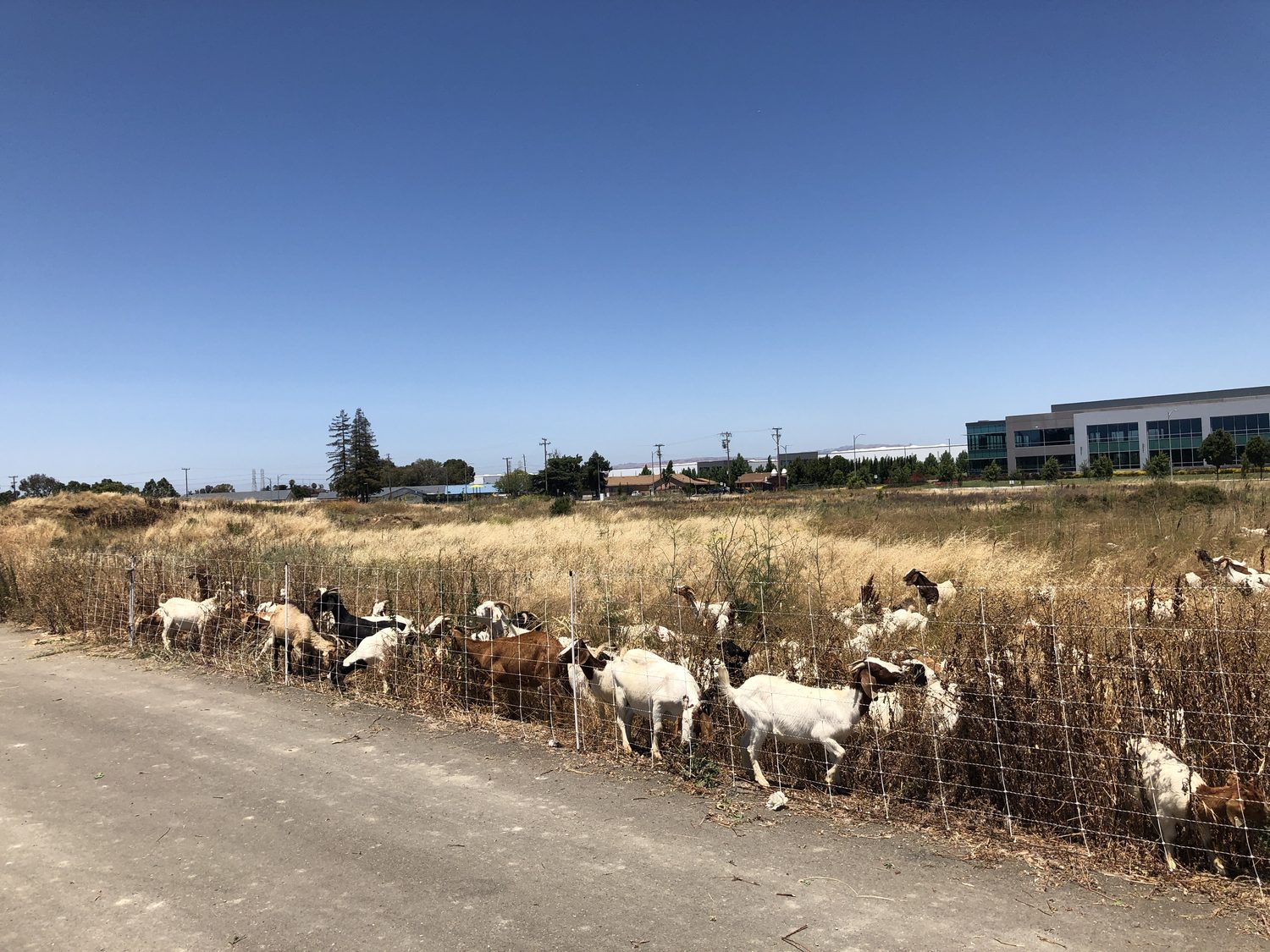
Why solar O&M teams switch to grazing
- No blade strikes, no thrown rocks: mowing between rows risks module damage every pass. Sheep don't.
- Full coverage: animals graze under panels and around posts — the zones string trimmers reach slowly and mowers can't.
- Zero spark risk: a mower blade on a rock in dry grass is an ignition source inside your own fence line. Grazing removes the fuel and the spark at once.
- No herbicide liability: no drift, no runoff, no groundwater questions from neighbors or regulators.
- Soil upside: published research on grazed solar sites found improved soil organic matter and biological activity — vegetation management that regenerates the asset's land.
- ESG that's real: agrivoltaics is a documented, photographable sustainability practice — not a slide-deck claim.
How a solar grazing contract runs
We scope from your site plan: acreage, row spacing, vegetation type, water access, and your height specs. Flocks work in electric-netted cells inside your perimeter, rotated to hold vegetation below panel edge height across the growing season. Herders coordinate with O&M for access and inspections, and you receive documentation of coverage and dates for compliance records. Seasonal recurring contracts are the norm — vegetation grows every year, and so does the schedule.
Brushy perimeters and adjacent slopes outside the array can be handled by goat crews on the same mobilization — see our sheep grazing service and the solar grazing census story for more.
Common questions
Why sheep instead of goats on solar sites?
Sheep graze heads-down and ignore hardware; goats climb, chew, and investigate — bad traits around racking and wiring. Sheep are the industry standard for solar grazing nationally, and we deploy sheep (not goats) inside arrays. Goats can still handle brushy site perimeters outside the fence.
How is vegetation height maintained under panels?
Rotational grazing in fenced cells keeps growth below panel edge height across the season. Grazing reaches under and between rows that mowers reach slowly or not at all, with no blade strikes, no thrown rocks, and no herbicide runoff into surrounding land.
What about site security and animal management?
Temporary electric netting subdivides the site into grazing cells inside your existing perimeter fence; herders check animals daily; livestock guardian dogs accompany flocks where predators are a factor. We coordinate access, badging, and safety requirements with your O&M team.
Can grazing satisfy vegetation-management compliance requirements?
Grazing is an accepted vegetation-management method used across the U.S. solar fleet — the NREL/ASGA census counted over 113,000 sheep on roughly 129,000 acres of solar sites in 2024. We provide documentation of work performed, dates, and coverage suitable for O&M records and AHJ requirements.
Managing vegetation across a solar portfolio?
We work with municipalities, fire districts, HOAs, utilities, schools, and commercial owners — licensed, registered, and insured, with experience in public procurement.
Prefer to talk? 1-858-751-GOAT
The numbers
- 113,000+ sheep grazing U.S. solar sites (2024 census)
- ~129,000 acres under solar grazing nationally
- 0 blade strikes, sparks, or herbicide applications