
Do goats really help prevent wildfires?
Goats are showing up on hillsides from Los Angeles to the Bay Area ahead of fire season. Here is what the science actually says about grazing, fine fuels, and defensible space.
Every summer, California braces for fire season — and increasingly, one of the tools showing up on hillsides isn't a machine at all. It's a herd of goats. But do goats actually help prevent wildfires, or is it mostly a good photo op? The honest answer: goats don't prevent wildfires, but well-managed grazing can meaningfully reduce the fuel that lets fire spread. Here's what the research and the agencies using it actually say.
First, the scale of the problem
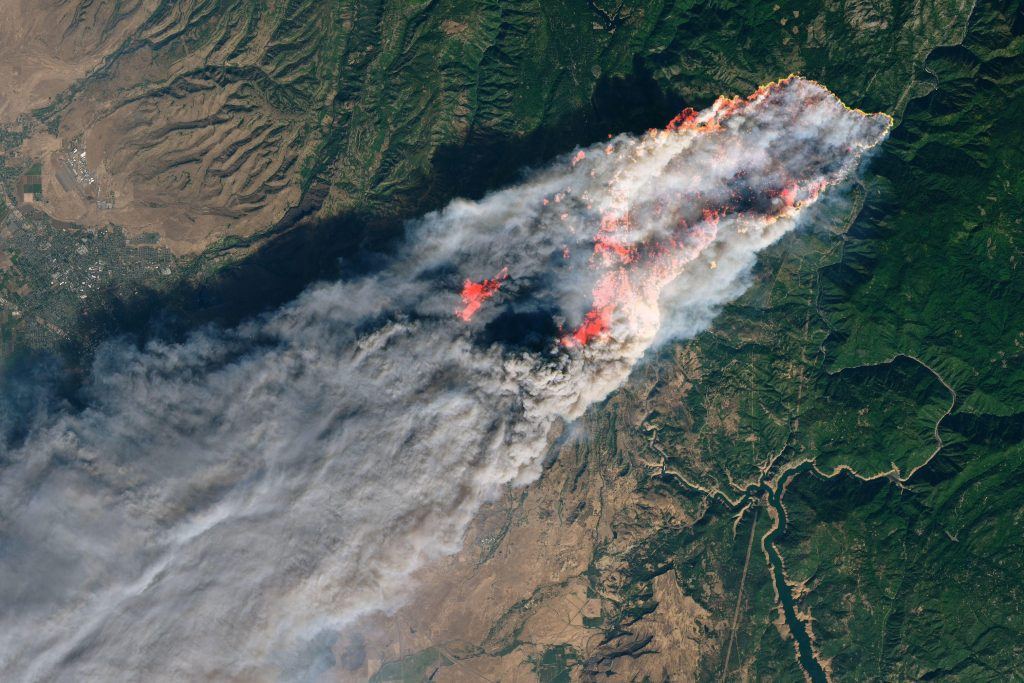
California wildfires burn an average of hundreds of thousands of acres every year, and recent seasons have been historic. In January 2025, a cluster of wind-driven fires around Los Angeles — led by the Palisades Fire (roughly 23,700 acres) and the Eaton Fire (roughly 14,000 acres) — destroyed more than 18,000 homes and structures and ranked among the most destructive fires in state history. The state's largest fire on record, the 2018 Camp Fire, burned over 153,000 acres.
What most of these fires have in common is fuel: dry grasses, brush, and overgrown slopes that carry flames toward homes and roads. That's exactly what targeted grazing goes after.
What the research shows
Goat grazing sits under a broader practice fire scientists call targeted grazing or conservation grazing. A 2014 review in the journal iForest concluded that grazing is an effective, low-cost, non-toxic, and nonpolluting way to reduce wildfire fuel when it's planned well. Reporting in National Geographic highlighted research (published in Forest Ecology and Management) finding goats are especially effective at reducing fine fuels — flammable material smaller than about a quarter inch, like grass and pine needles — which are the most likely to carry a continuous bed of fire.
A peer-reviewed study of a southern California shrubland (published in Fire Ecology) found goat grazing effectively raised the distance from the ground to the base of tree crowns — in other words, it reduced the ladder fuels that let a ground fire climb into the canopy. Researchers at Stanford's Jasper Ridge Biological Preserve and Cal Poly have similarly studied and deployed goats as a fuel-reduction tool.
Targeted grazing works best when it's combined with other measures — not as a stand-alone fix. Studies consistently frame goats as one layer of defense, most powerful alongside prescribed burning, mechanical work, and structure hardening.
Where goats genuinely shine
Goats have a real advantage on exactly the terrain that defeats other methods:
- Steep, rocky slopes and canyons that are unsafe for mowers and slow for hand crews.
- The wildland-urban interface — the brushy edges where neighborhoods meet open space and defensible space matters most.
- Areas near waterways where herbicides are restricted.
- Ladder fuels and fine fuels — the grasses, weeds, and low brush that spread fire — which goats consume on site, leaving no cut material to haul away.
What goats can't do — the honest limits
Being straight about this matters. Goats don't remove trees, stumps, or dead standing timber, and they don't create bare mineral soil or a finished fire break on their own. Some plants are naturally bitter or toxic and goats will avoid them. Vegetation grows back, so grazing is a seasonal, repeatable tool rather than a one-time cure. And some land managers argue grazing is impractical or costly at very large scales. No service — goats included — can make a property "fireproof."
The right way to think about it: grazing is a powerful first pass and ongoing maintenance tool that fits inside a complete defensible-space plan, which may still include mechanical work, hand crews, and hardening the structures themselves.
How agencies actually use it
Across California, fire departments, counties, and utilities have folded goat grazing into their fire-prevention playbook — from Southern California fire departments and county parks to utility rights-of-way and FEMA-funded defensible-space projects. We cover who's using it, and where, in our companion guide on where goat grazing is catching on across California.
The bottom line
Do goats prevent wildfires? No — nothing does. But targeted goat grazing is a research-backed, chemical-free, terrain-friendly way to reduce the fuels that make wildfires worse, particularly on the steep, brushy ground where it's hardest to work. Used as part of a broader plan and repeated seasonally, it's earned its place in California's fire-prevention toolkit.
Sources
- National Geographic — Goats may help prevent wildfires in California as drought worsens
- Fire Ecology (2021) — Plant community response to fuel break construction and goat grazing in a southern California shrubland
- iForest (2014) — Goat grazing as a wildfire prevention tool: a basic review
- NPR (2023) — How goat grazing helps fight California wildfires
- Cal Poly (2024) — Goats are the latest land-management tool in preventing wildfires
- CAL FIRE — Wildfire statistics; Wikipedia — January 2025 Southern California wildfires
Get ahead of fire season
Talk to a real person about your property and get a free estimate over the phone — we serve properties across California and generally require about a 5-acre minimum per project.
Call 1-858-751-GOATSee how it works