
What our projects look like
Four kinds of work make up most of what our herds do. Here's how each one runs — terrain, timing, and what the land looks like when the goats are done — with photos from the field.
A hillside fuel break before fire season
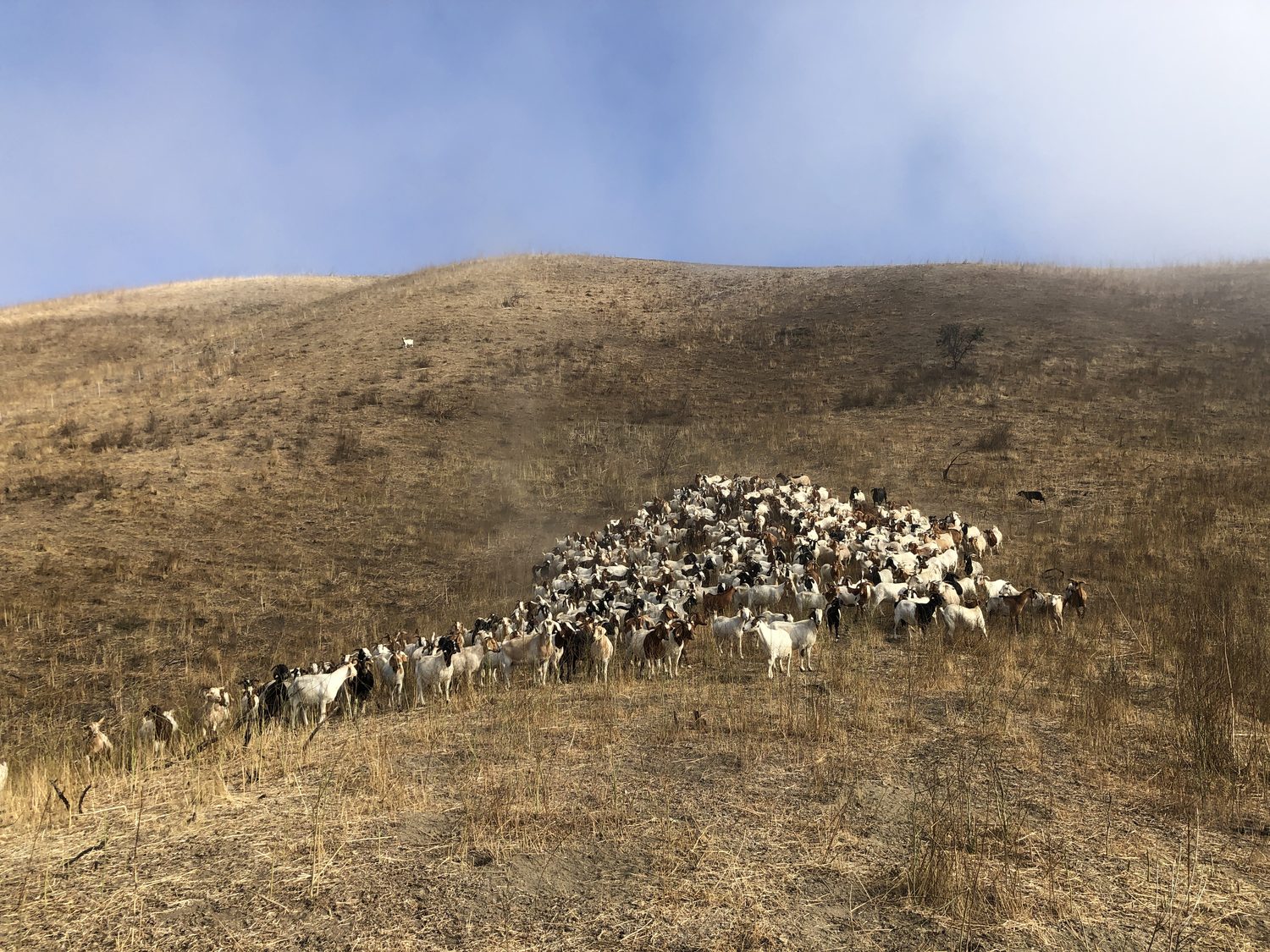
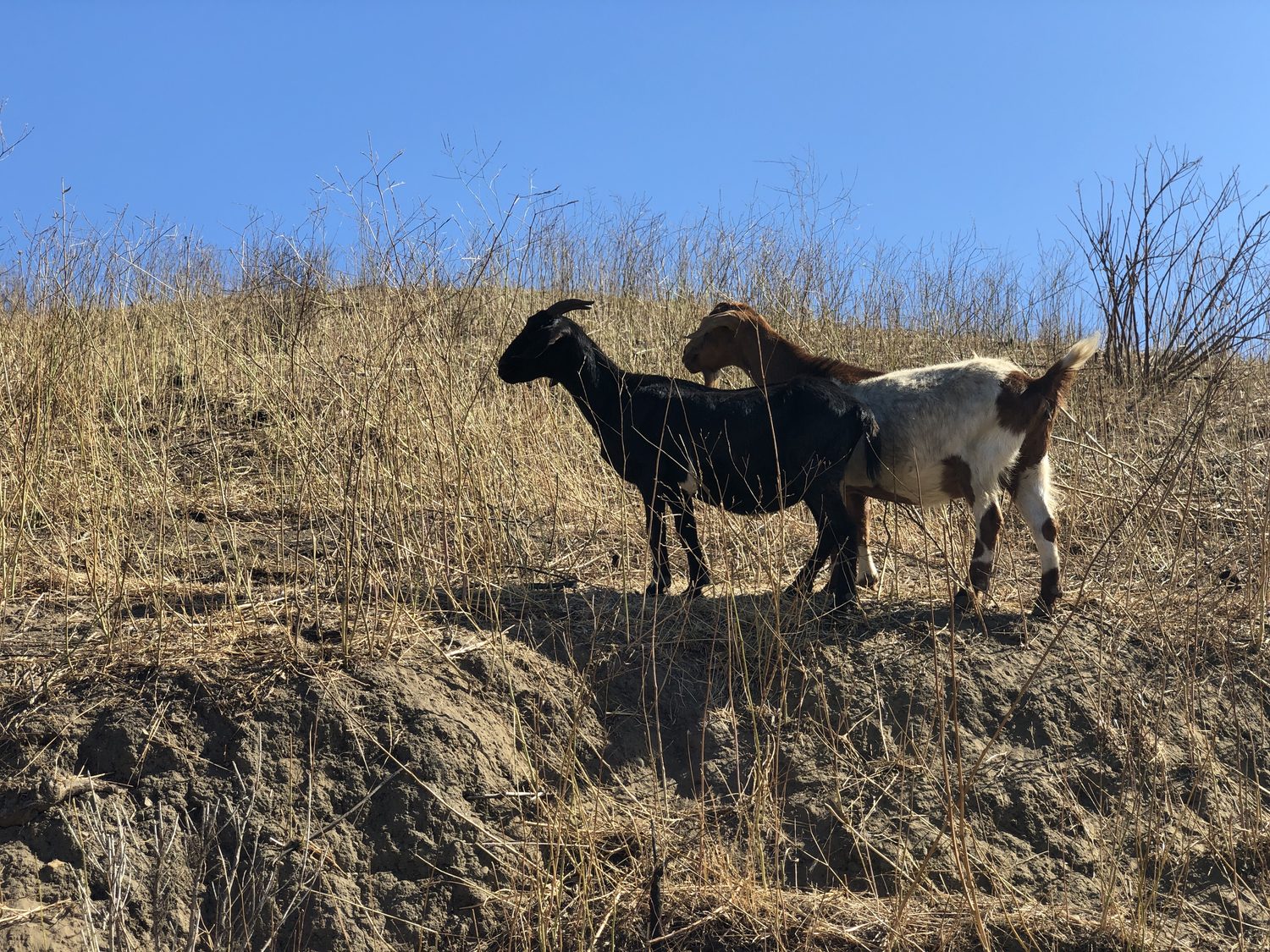
The classic Rent A Goat project: a brush-covered slope in the wildland-urban interface, too steep for mowers and too costly for hand crews, that needs its fuel load down before summer.
We fence the target area with temporary electric netting, bring in a herd sized to the acreage and vegetation density, and let them work section by section. The goats strip grass, brush, and the ladder fuels that carry ground fire into trees — and because they eat what they clear, nothing gets hauled or burned.
A typical multi-acre hillside takes days to a couple of weeks depending on density. What’s left is a grazed buffer that slows fire, gives crews defensible ground, and satisfies defensible-space clearance requirements.
- Terrain: Steep slopes, canyon edges
- Best timing: March – July
- Alternative: Hand crews at 3–5× the cost
Reclaiming land from blackberry, poison oak, and pampas grass
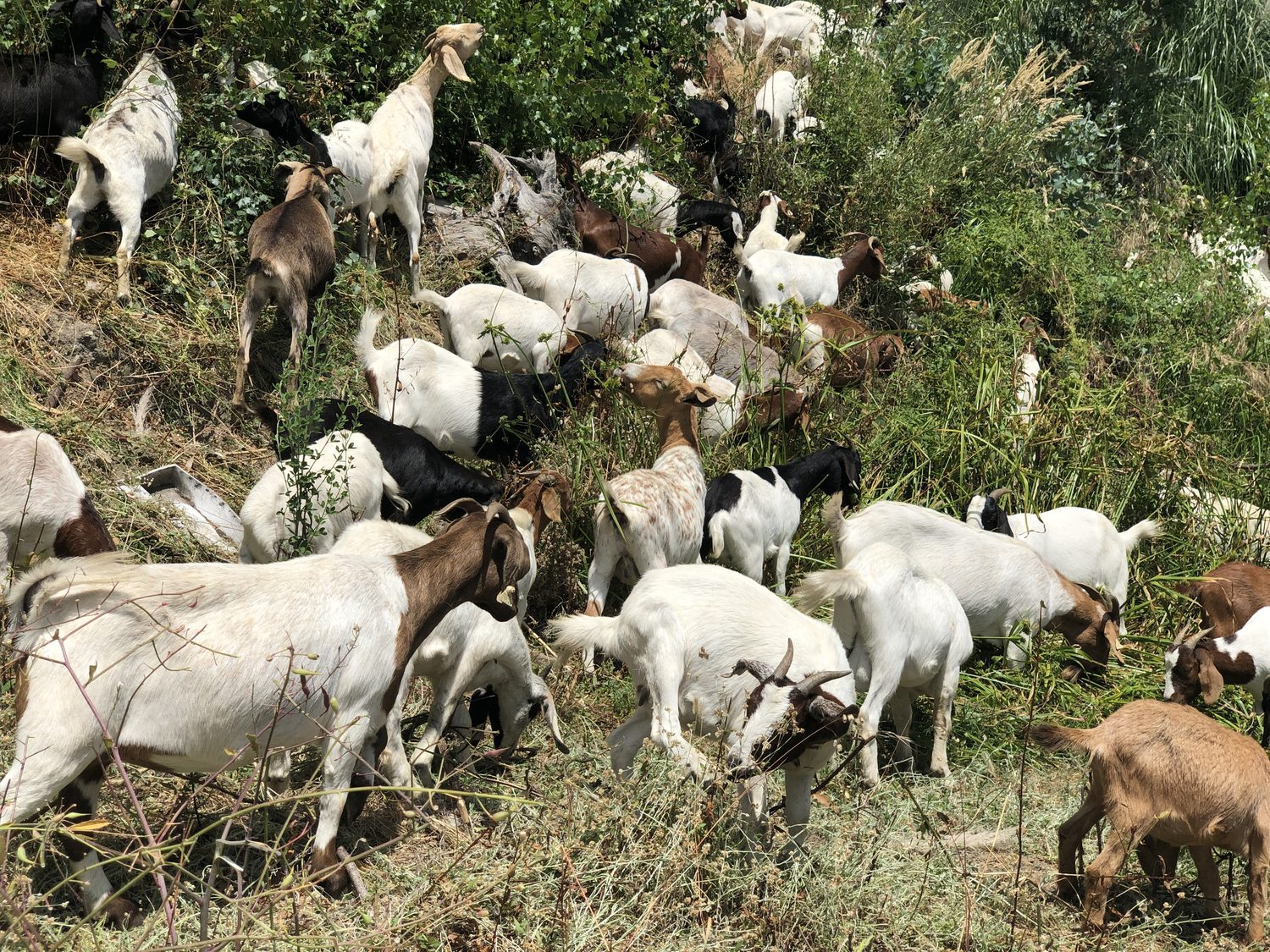
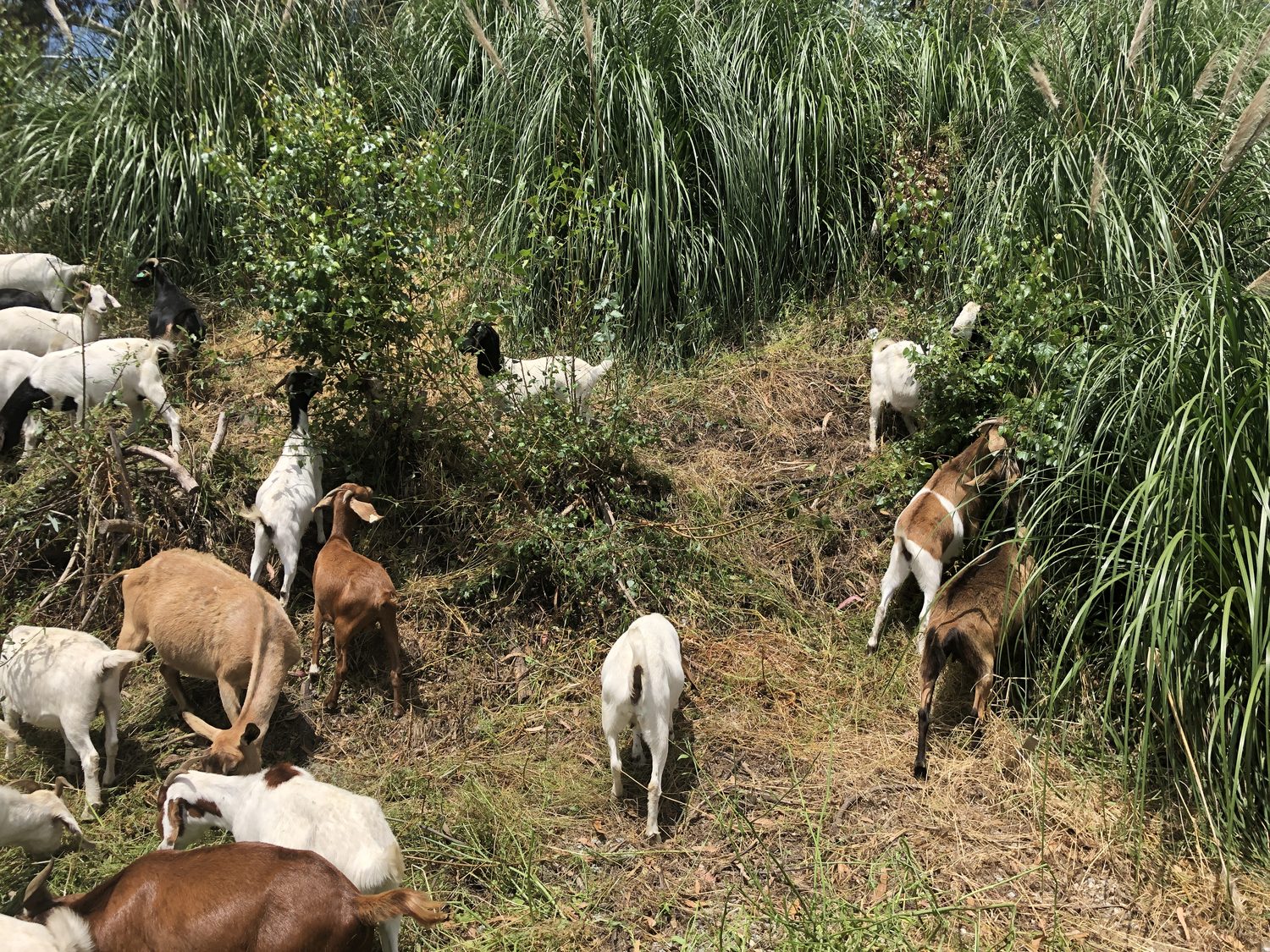
Invasive-choked parcels are where goats genuinely outshine everything else. Blackberry thickets, poison oak, English ivy, pampas grass — plants that are miserable or hazardous for human crews are browse goats actively prefer.
Goats defoliate invasives repeatedly, drawing down the root reserves that let them resprout. On heavily infested ground we often recommend two or three grazing passes across a season or two — each pass gets easier, and native grasses start coming back where the canopy opened up.
No herbicide drift, no disturbed soil inviting reinfestation, and no crew members in the poison oak.
- Favorite targets: Blackberry, poison oak, ivy, thistle
- Approach: Repeat passes for rootstock knockdown
- Bonus: Zero herbicides near water or habitat
Campuses, utility land, and city open space
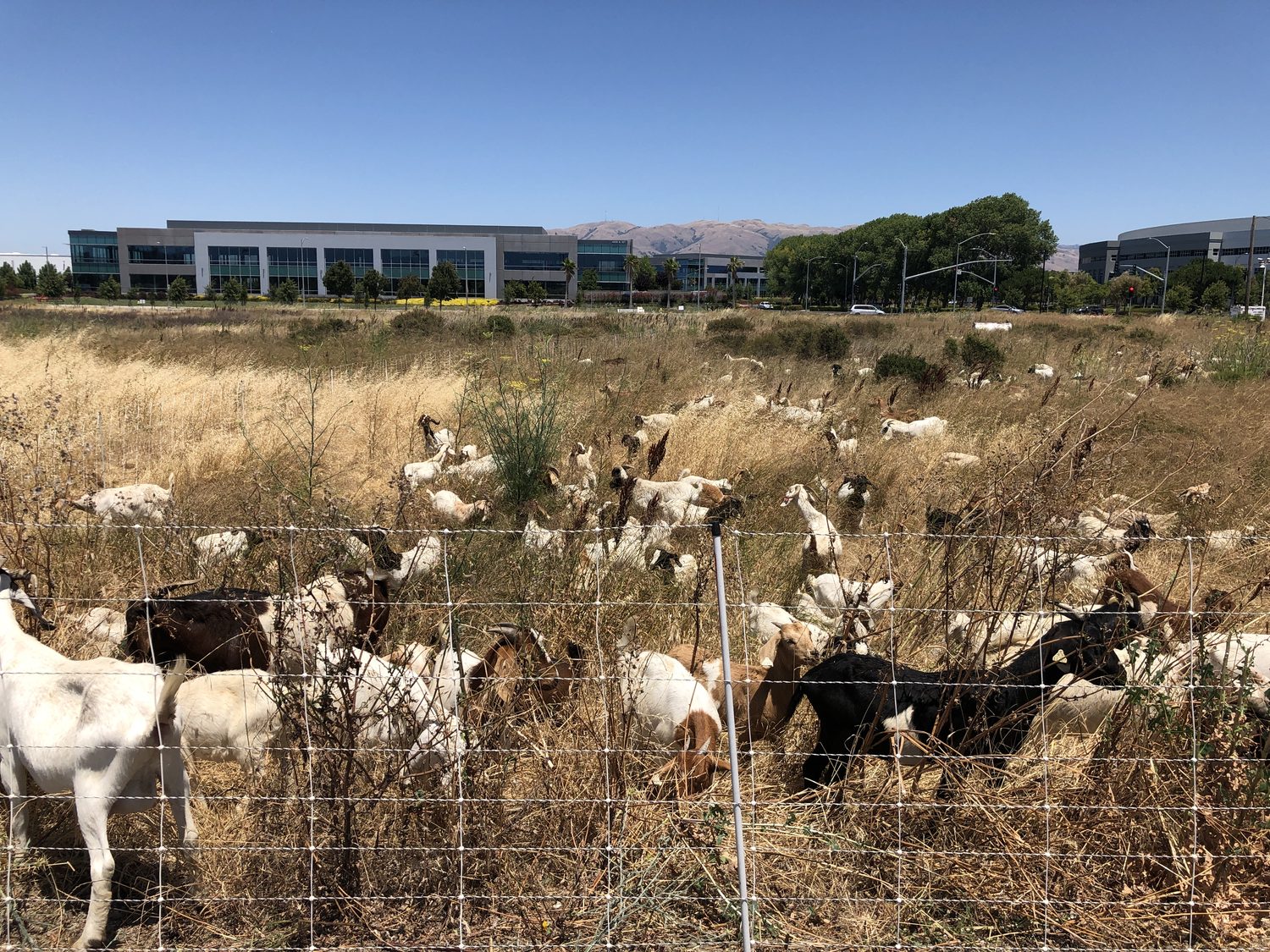
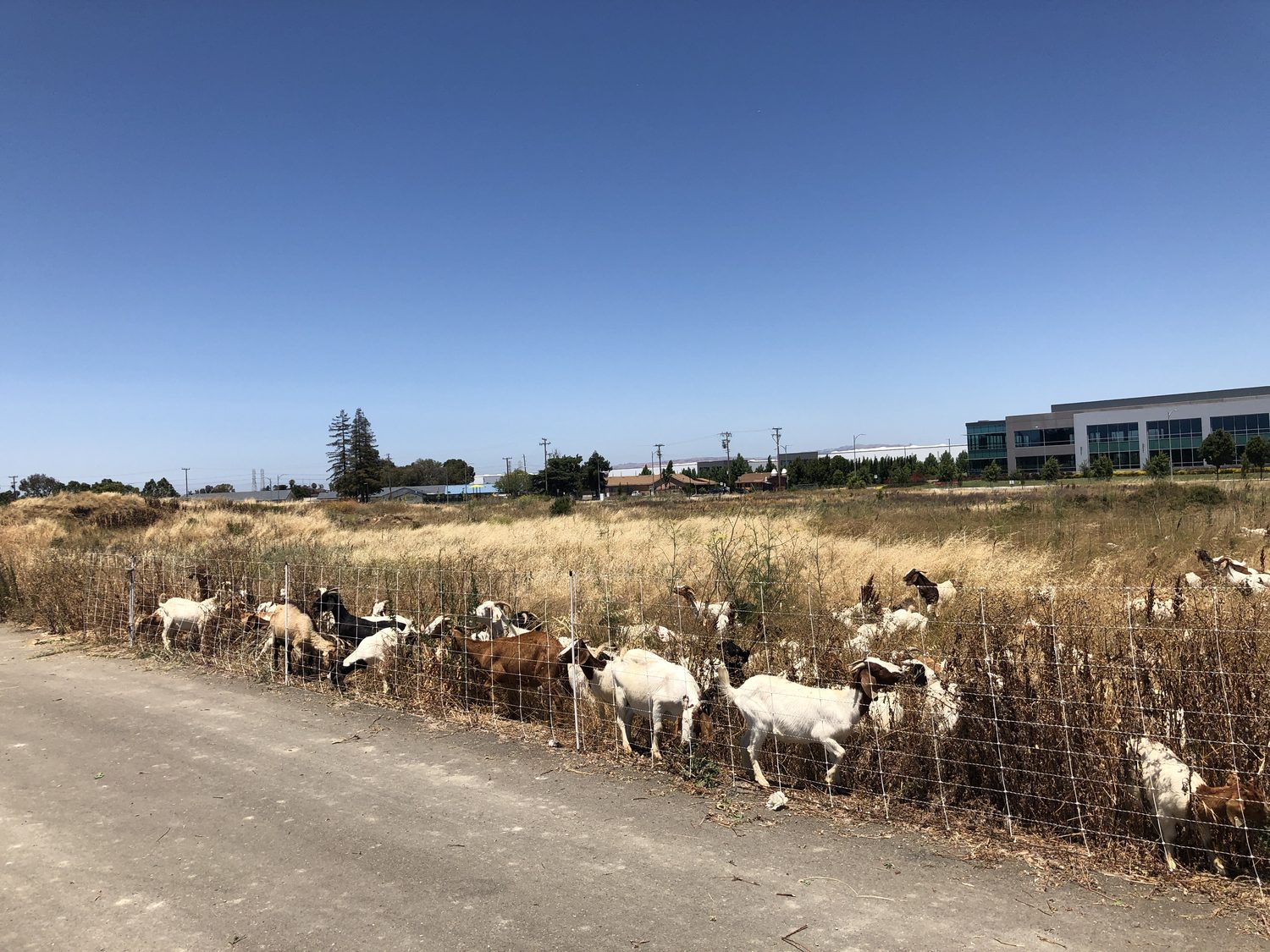
Corporate campuses, utility corridors, solar farms, and municipal open space all share the same problem: recurring vegetation on land that’s awkward, sensitive, or expensive to mow — often with spark-risk rules that make machinery a liability in dry months.
Herds work these sites quietly, with no fuel, no noise complaints, and no spark risk. For public-facing sites there’s a genuine side benefit: people love them. Goat herds on city land reliably generate goodwill and local press that a mowing contract never will.
We handle fencing, water, herding, and insurance; site owners provide access. Recurring seasonal contracts keep vegetation from ever reaching problem stage.
- Typical clients: Cities, HOAs, utilities, campuses
- Contract style: One-time or recurring seasonal
- Side effect: Extremely positive PR
Big herds on big ground
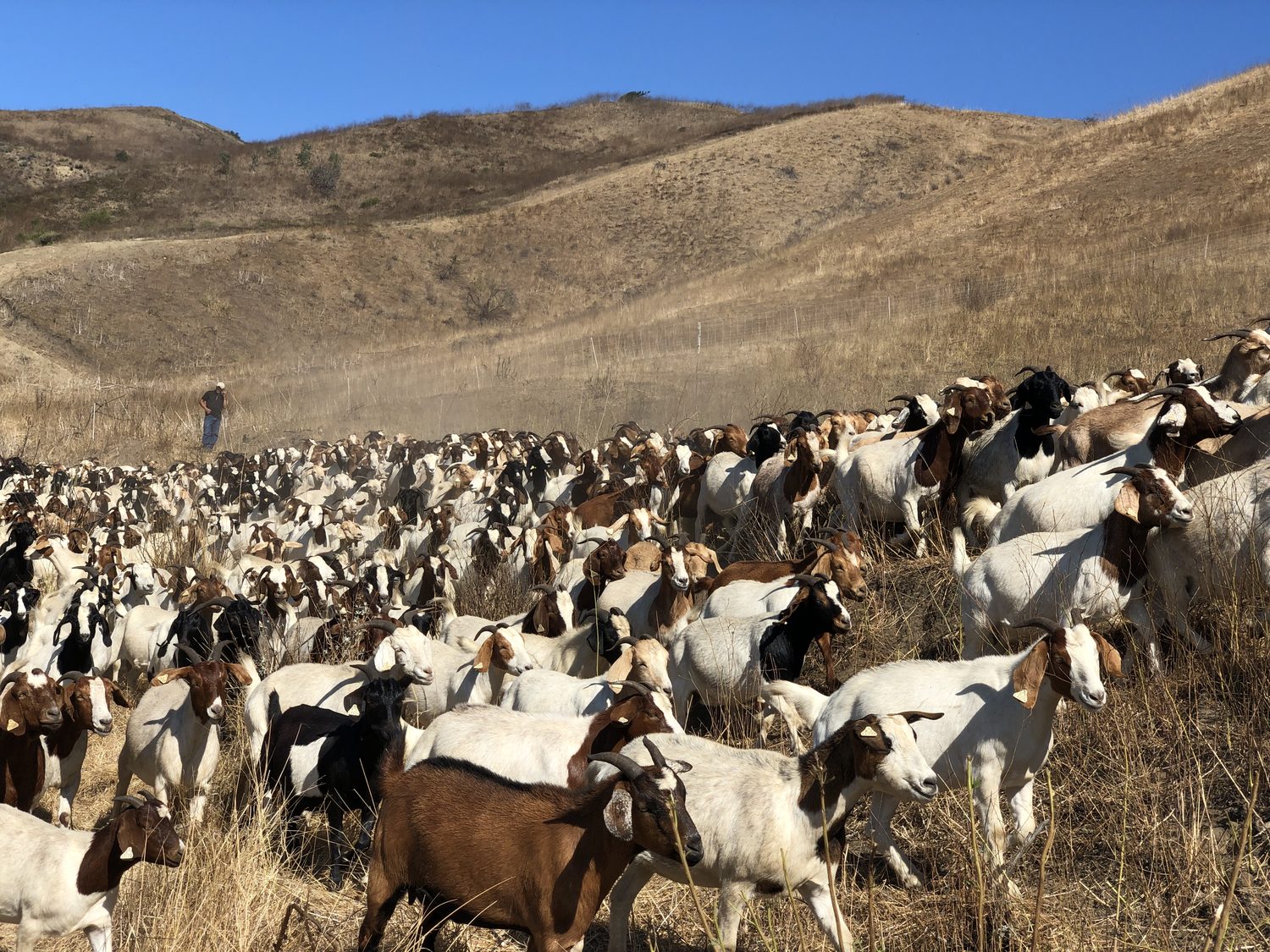
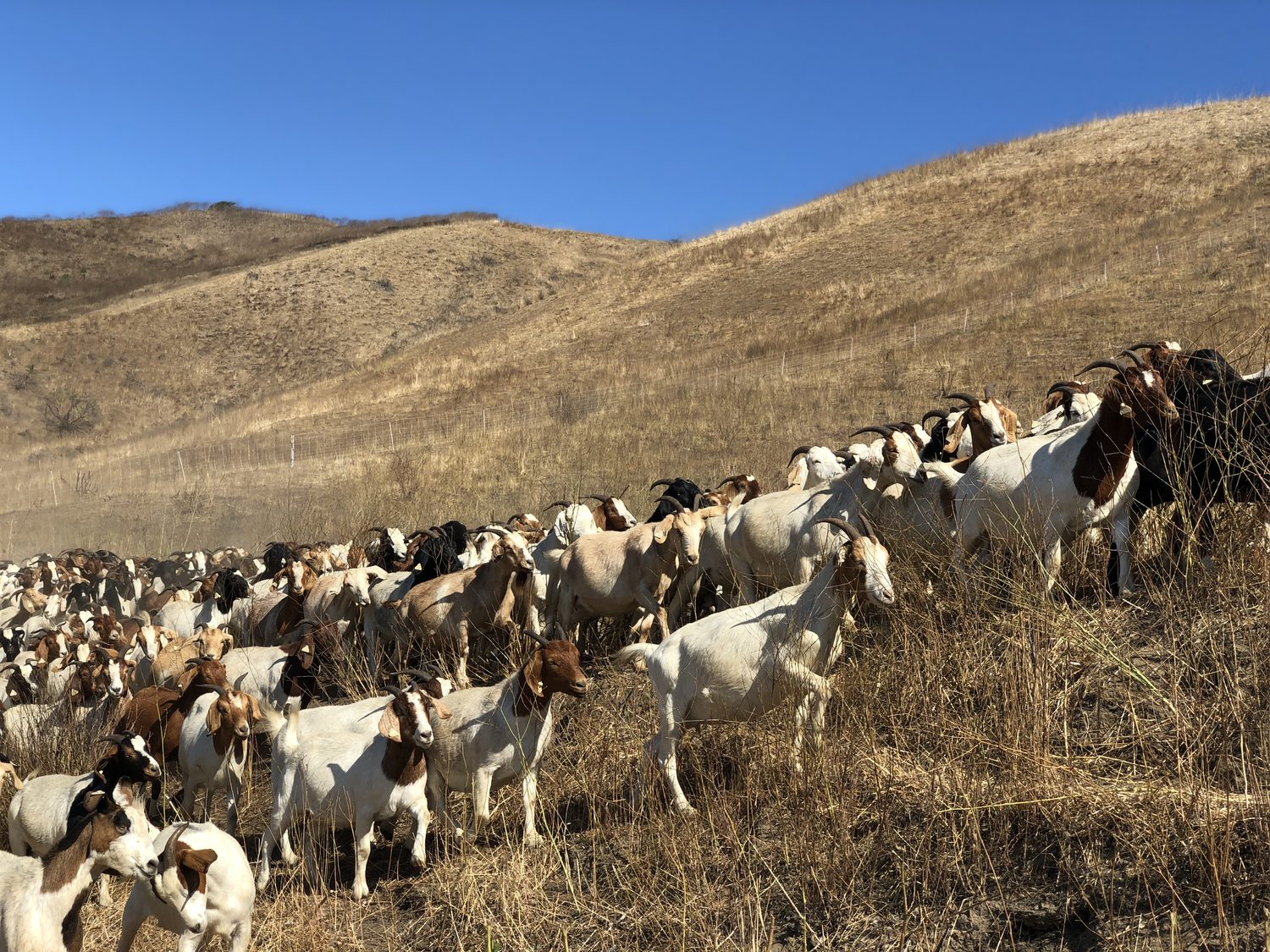
Ranches, preserves, and large private holdings measure projects in dozens or hundreds of acres. At that scale, grazing works like a slow-moving machine: hundreds of goats moving across the land in fenced cells, reducing fuel loads evenly across terrain no mower will ever touch.
Large projects are where grazing economics shine — mobilization is spread across more acres, and per-acre cost drops well below hand-crew rates on comparable ground.
Multi-year grazing plans compound: each season’s pass reduces regrowth, shifts plant composition toward grasses, and makes the next year’s work faster.
- Scale: 20 – 500+ acres
- Economics: Per-acre cost falls with size
- Long game: Multi-year plans compound results
Want more photos? Browse the full gallery →
Have a project like one of these?
Talk to a real person about your property and get a free estimate over the phone — we serve properties across California and generally require about a 5-acre minimum per project.
Call 1-858-751-GOATSee how it works