When to book goat grazing in California
Grazing is seasonal, calendars fill fast, and the best window is earlier than most people think. Here's the honest month-by-month guide to timing your project.
The single most common scheduling mistake in this business: calling when the hillside already looks scary. By then everyone else's hillside looks scary too, and the herds are spoken for. Grazing follows the grass, the grass follows the rain, and the calendar below follows both. One rule beats everything else on this page: book one to three months before you want goats on the ground.
The year, month by month
January – February — Plan and book
The quiet secret of the calendar: this is when smart clients lock in spring slots. Estimates are faster, dates are open, and you get first pick of the March–May window. Rain-soaked ground can delay some projects, but planning costs nothing.
March – May — The golden window
Grass and brush are grown but still green — goats remove the material before it cures into fire fuel. This is peak demand: herds are fully committed and calendars run one to three months out. If you are calling in April for April, options will be limited.
June – July — Fire-season catch-up
Vegetation has cured; the work is now urgent rather than preventive. Grazing still beats machines here — no spark risk on red-flag days, when mowing is restricted or reckless. Inspection notices tend to arrive in this window, and we do a brisk business in "the county gave me 30 days."
August – October — Maintenance and regrowth
Late-season passes knock down regrowth and keep grazed properties compliant through the worst of fire weather. A good time for second passes on invasive-plant projects and for commercial sites on recurring contracts.
November – December — Brush and invasives season
With fire season winding down, attention turns to the long game: blackberry, ivy, and brush projects where repeated browsing through the dormant season drains root reserves. Also the right time to scope large spring projects and get on the calendar early.
Matching the project to the season
Fire-fuel reduction: spring, ideally finished before June. Brush and invasive plants: almost any time, with fall/winter passes especially effective for knocking down blackberry and ivy root reserves. HOA and commercial recurring contracts: set a spring pass plus a late-summer touch-up and stop thinking about it. Post-inspection notices: whenever the county says, which is why summer is busier than it should be.
Rough guide to lead times: January booking, February–March start. March booking, April–June start. May–June booking, take what's available. The earlier end of every range gets the better dates.
Why the window matters more than most services
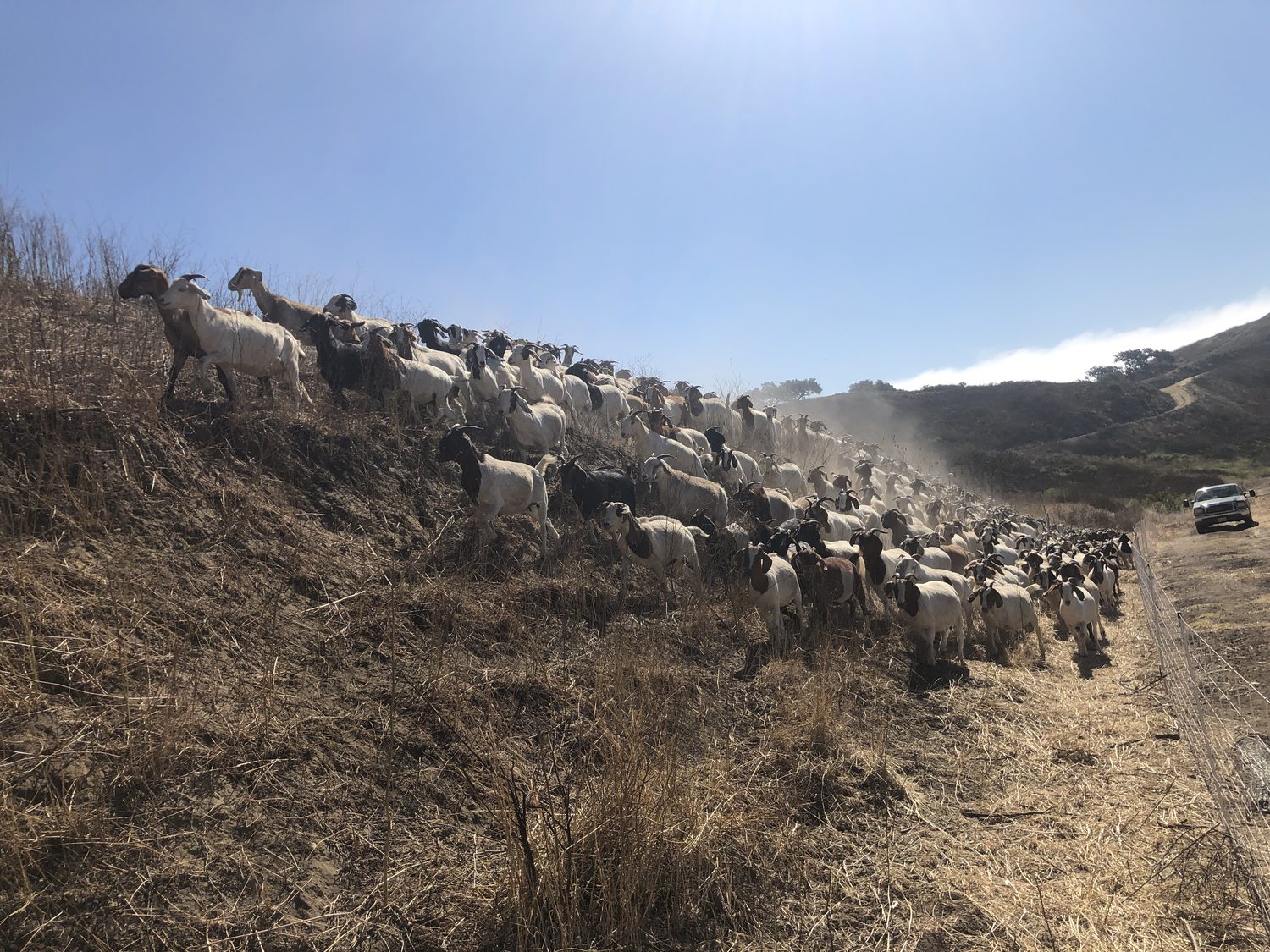
A landscaper can usually squeeze you in next week; a herd can't. Goats are living infrastructure — herds move between projects in sequence, and a 400-goat herd committed to a utility corridor in April is committed. That's also why grazing prices hold steady rather than surging in peak season: the supply is the herd, and the herd doesn't do overtime. The lever you control is timing.
The bottom line
If you're reading this in winter: book now, thank yourself in May. If you're reading this in spring: book today. If it's already fire season: call anyway — tell us your situation, and if there's a gap in the calendar we'll find it. And if you want next year to go smoothly, ask about a recurring slot; our longest-running clients never think about scheduling at all.
Get on the calendar before it fills
Talk to a real person about your property and get a free estimate over the phone — we serve properties across California and generally require about a 5-acre minimum per project.
Call 1-858-751-GOATSee how it works