
When firefighters buy goats, pay attention
No one evaluates fuel-reduction methods more ruthlessly than fire agencies — they answer for the results in fire season. So it says something that goat grazing now appears as an official program on fire-department websites across California.
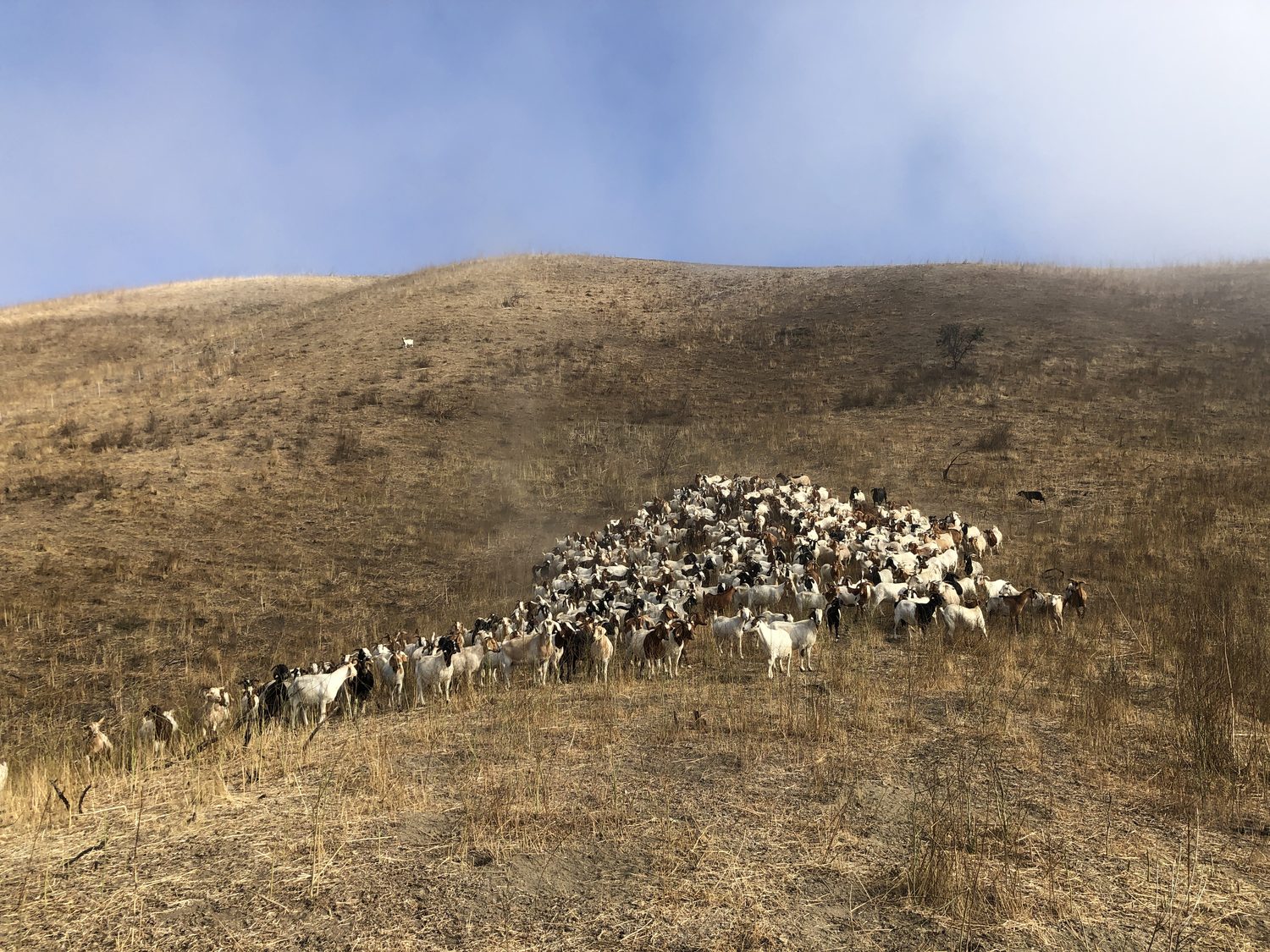
The Los Angeles County Fire Department runs a goat grazing program for fuel reduction on county land. Laguna Beach's fire department has operated its grazing program since the early 1990s, expanding it after the 1993 fire that destroyed or damaged 441 homes; the city now deploys from 75 up to as many as 1,000 goats a year on its fuel breaks, budgeting roughly $185,000 annually. Glendale's fire department contracts herds for the brushy hills above the city, and Santa Rosa has deployed goats repeatedly on city open space since the Tubbs Fire.
Why agencies choose herds
The reasons fire departments cite are the practical ones: goats work the steep, brushy terrain where crews are slow and machines are unsafe; they remove fuel without the spark risk of mowing in dry season; and they maintain fuel breaks year after year at predictable cost. Laguna Beach's program — born from a devastating fire — is explicitly about maintaining the perimeter fuel breaks that give the city a fighting chance in the next wind event.
It goes beyond cities. Federal land managers use grazing at serious scale: reporting on Bureau of Land Management fuel projects in California found roughly a third of treated acres involved grazing, with grazed acreage more than doubling between 2018 and 2022. And utilities have joined — SoCalGas documents goat grazing as part of its fire-mitigation work around facilities.
What this means for property owners
When your city's fire marshal recommends defensible space, they're often maintaining their own with goats. Property owners who graze are using the same tool, on the same logic, at parcel scale — and fire agencies' public embrace of grazing is a big reason inspectors, insurers, and grant programs treat it as a legitimate line item.
If your city doesn't have a grazing program yet, that's also an opportunity: CAL FIRE prevention grants explicitly fund prescribed grazing, and councils are actively looking for shovel-ready projects.