
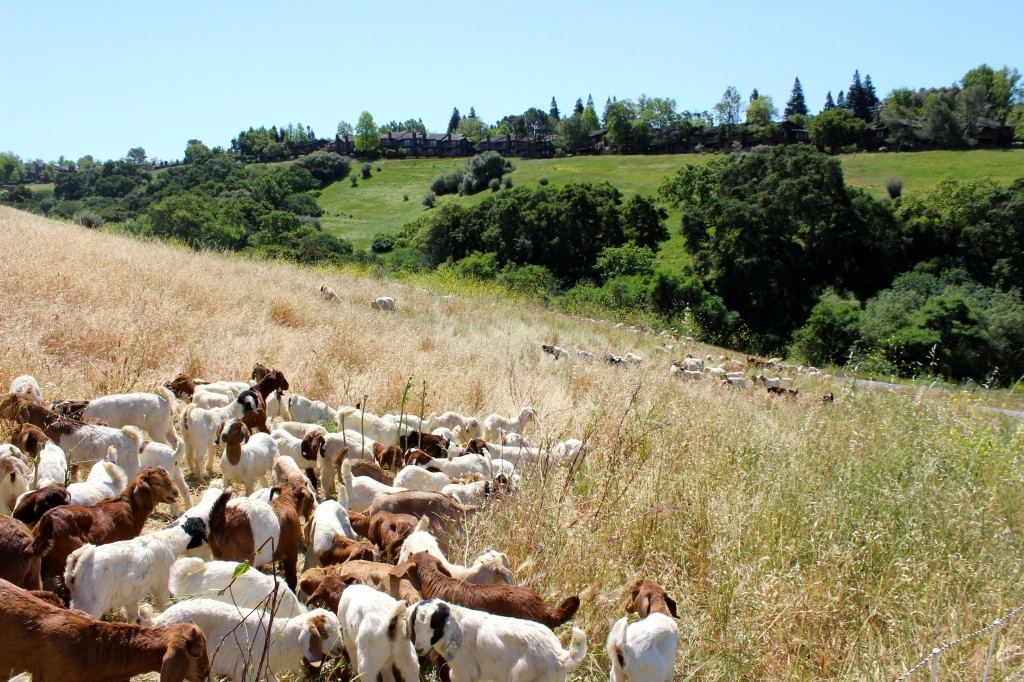
A two-month gap, closed in the session’s final hours
California lawmakers have restored wage parity between sheep and goat herders, ending a two-month period in which the state’s targeted-grazing operators said they were choosing between bankruptcy and breaking the law. The fix rides on AB 187, budget trailer legislation passed August 31, and it holds the same alternative monthly minimum wage structure in place for goat herders and sheep herders alike through January 1, 2029.
The gap opened July 1, when the temporary parity established by Senate Bill 143 expired. Without it, goat herders fell under standard agricultural overtime rules — a structure built for shift work, applied to a job that is on-call around the clock. The California Farm Bureau estimated the result at roughly $240,000 a year per herder, against the roughly $60,000 operators had been paying. The Legislature finished its 2025-26 session in the early hours of September 1, hours after the trailer bill cleared.
State Senator Melissa Hurtado (D-Bakersfield), who led the push, framed it as a wildfire question rather than an agriculture one. “I am proud to have led the effort to restore wage parity at a time when California is investing heavily in wildfire resilience,” she said in a statement. “The state could not afford to sideline prescribed grazing over an unnecessary pay disparity between workers performing essentially the same job.”
How the coalition got there
Hurtado assembled a bipartisan coalition of legislators — The Business Journal reported 32, her own office described 31 — who signed an August 10 letter to Governor Gavin Newsom and legislative leadership asking them to restore the provision. The letter argued that applying two different wage structures to sheep and goat herding threatened agricultural jobs and would shrink the pool of prescribed grazing available for wildfire prevention.
The coalition leaned on the state’s own homework. A California Department of Industrial Relations study, conducted with UC Davis researchers, found that sheep and goat herders perform substantially similar work and share many of the same responsibilities, and that maintaining separate wage structures for jobs that frequently overlap is difficult in practice. That study had been commissioned under SB 143 and delivered before the parity provision lapsed — a sequence operators spent the summer pointing at.
Senator Catherine Blakespear (D-Encinitas) described the stakes in blunter terms: “Goat herding as a wildfire mitigation tool in California has been saved, for now. A recently expired law reclassified goat herder wages and nearly forced the slaughter of goats or pushed the industry out of state completely.” California Farm Bureau President Shannon Douglass credited Hurtado directly: “As the legislative session ends, Senator Hurtado deserves our thanks for her work to keep goats available for wildfire fuel reduction. Common sense prevailed there, and we’re grateful for it.”
What the two months actually did to operators
Tim Arrowsmith, who runs Western Grazers out of Red Bluff with roughly 5,000 goats and eight herders, spent August telling reporters he was operating in open defiance of a rule he could not afford. “As of right now if we were paying the wage we would file bankruptcy but we opted not to pay it,” he told Action News Now on August 19. The round-the-clock herder rate under the lapsed structure had been $4,938.21 a month in 2026. He had threatened to sue the state by August 31 if nothing changed, and challenged state leaders to a $5,000 charity wager along the way.
“It’s not just the months of March through October, we graze all year long so we’re affecting whatever ground we’re on all year long,” Arrowsmith said, describing why a summer-only workaround would not have helped. “You’re frustrated, you know it’s there, you have to try to do business as if that law is not there.”
The labor argument did not disappear with the fix. More than 90% of California’s sheep and goat herders work on H-2A visas, most from Peru and Mexico. Lorena Gonzalez-Fletcher, president of the California Federation of Labor Unions, has described the conditions plainly: “They are isolated in a trailer without human contact watching goats. They have no path to citizenship, they have no other life.” Bryan Little of the California Farm Bureau argued the on-call structure reflects real hours: herders “can’t necessarily go to the grocery store or go to the movies or whatever the case might be, but they’re also not working.” Both things are true at once, which is why the question keeps coming back.
Who was asking for it
The pressure did not come only from ranchers. Kings County Fire Department Chief John Chamberlin wrote that grazing animals “have become an extremely viable component of the fuels reduction sequence… They have become a necessity for many fuels reduction plans,” noting that in Kings County they are routinely used inside solar arrays to keep grass and weeds down.
Catherine Van Dyke, director of water policy at the Community Alliance with Family Farmers, argued the structure is what keeps small and mid-size operations viable: allowing goat herders to share the same alternative minimum wage structure as sheep herders “is critical for both herders and small and mid-size livestock businesses.” The California Wool Growers Association thanked Hurtado for the temporary parity while pointedly asking for “long-term solutions to the issues threatening sheep and goat grazers in California.”
A 2021 survey identified at least 20 California businesses using goats for fuel reduction across 46 counties — a small industry by headcount, and one that cities, park districts, fire safe councils and homeowners associations have quietly built into their vegetation budgets.
Temporary, again
The word everyone used was temporary. AB 187 sunsets the parity on January 1, 2029, which means the underlying question — whether goat herding is legally the same job as sheep herding — gets pushed to a future Legislature rather than answered. State Affairs, reporting the budget deal on August 31, described it as a stop-gap that pushes the goatherder pay issue back to 2028.
Hurtado said she will keep pursuing a permanent change, and pointed to money she secured last year: “Last year, I secured $2 million for Kern County to keep sheep and goat herders at work — because we know this approach works. But our work is not finished. We need a permanent solution that protects good-paying jobs, supports small businesses, and keeps our communities safe.”
For operators, the practical effect is that booking calendars for 2027 and 2028 are now plannable, and herds that were being priced for liquidation are not. For everyone else, the deadline is on the calendar: this fight reopens before 2029.
Where Rent A Goat stands
We are a grazing company, so weigh this accordingly. We said in August that the state’s own commissioned report had already answered the policy question and that letting the finding expire protected no one. The Legislature has now agreed with that, for two more years. We would rather see the question settled permanently — with herder pay that is fair and a structure that reflects how the work actually happens — than watch the same cliff arrive again in 2028.