
A week that made the argument for us
In the space of seven days: more than 300,000 people displaced in France and Spain, with a Valencia official conceding on the record that “the fire is beyond our capacity to extinguish.” Two French firefighters killed near Bordeaux. Smoke from Canadian and Minnesotan fires putting more than 100 million Americans under air-quality alerts and costing Michigan, New York, and Wisconsin something on the order of $11 billion combined, by one preliminary estimate. And in Washington, a proposal to respond with tariffs.
It is hard to look at that week and conclude the binding constraint is willpower. Multiple European nations pooled aircraft over Gironde and still lost ground. Tariffs will not add a water bomber to anyone’s fleet.
Suppression has a ceiling, and we are at it
Firefighting is extraordinarily good at what it can do. Initial attack catches the overwhelming majority of ignitions, and the crews doing it are as capable as they have ever been. But a fire that is generating its own wind through continuous dry fuel is not a suppression problem in any meaningful sense. It is a weather event with a flame front, and it stops when the fuel or the wind runs out.
Every additional dollar of suppression capacity buys less than the one before it, because the fires that overwhelm suppression are precisely the fires that additional suppression cannot reach. The spending that changes outcomes on those days was committed years earlier — in fuel treatment, in defensible space, in home hardening, in where and how we allowed building in fire country.
Why prevention loses the budget fight anyway
Prevention has a structural political problem: its successes are invisible. No one holds a press conference for the fire that stayed small. An airtanker is a photograph; a grazed fuel break is a field that looks slightly shorter than it did last month. Budgets follow photographs.
It also crosses jurisdictions badly. The Michigan smoke number makes this vivid — the treatment decisions were made in Ontario and northern Minnesota, and the bill arrived in Detroit. Almost no institution is set up to spend money in one place to prevent losses in another, and so the spending does not happen.
And prevention is boring in the specific way that recurring maintenance is boring. Fuel grows back. A treatment done once and abandoned is a treatment wasted, which means the budget line is permanent, which is the hardest kind of budget line to defend.
What honest prevention spending looks like
Not one silver bullet. A serious program is layered: home hardening and Zone 0 clearance closest to structures, where the post-fire investigations consistently find the decisive factors; fuel breaks and treated perimeters at the property and community scale; prescribed fire and mechanical treatment at the landscape scale where conditions allow; and targeted grazing on the steep, brushy ground where crews are slow and machines are unsafe.
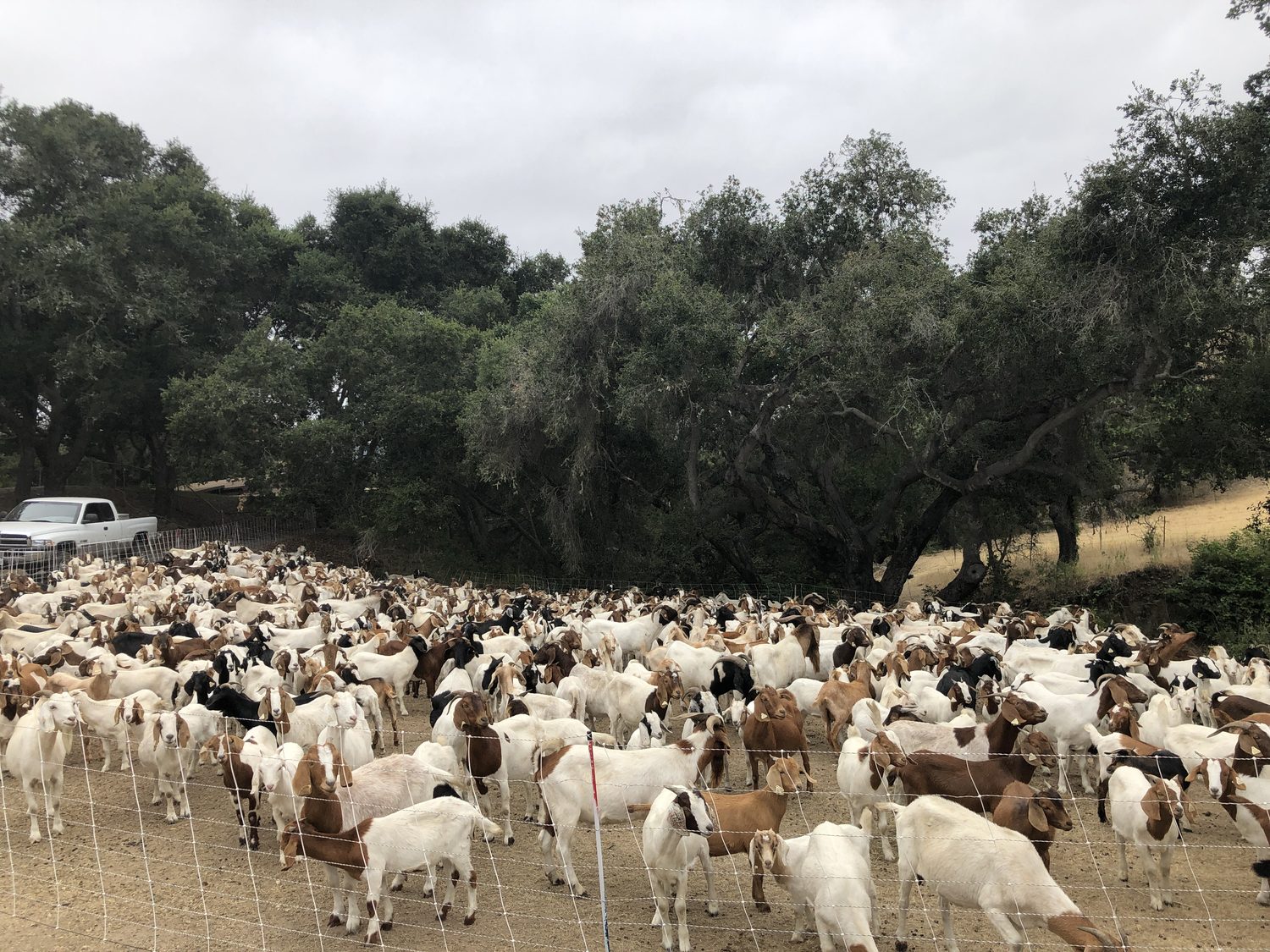
We should disclose our stake in that last one — Rent A Goat is in the grazing business, and readers should weigh this argument accordingly. So here is the honest version of the case: grazing is a good tool for a specific problem, it is not a substitute for home hardening, and no one should hire a herd believing it will stop a crown fire. The strongest evidence for it is not our marketing but the fact that fire departments spend their own prevention budgets on it — Laguna Beach has run a grazing program since the early 1990s and budgets roughly $185,000 a year for it.
The case against
The counterargument deserves stating. Prevention spending is genuinely hard to evaluate — you cannot easily measure fires that did not happen, and treatment effectiveness varies enormously with fuel type, weather, and how recently the work was done. Some fuel treatments have underperformed in extreme wind events, and some of the research base is thinner than advocates imply.
There is also a real equity objection: shifting cost onto individual landowners through clearance mandates and insurance requirements falls hardest on people who cannot afford the work, and prevention framed as personal responsibility can become a way of not funding public programs at all.
Both points are fair, and neither changes the arithmetic on the days that matter. When a fire is making its own wind, the levers left are few. The ones that worked were pulled a season earlier.