
A wage rule with a cliff edge
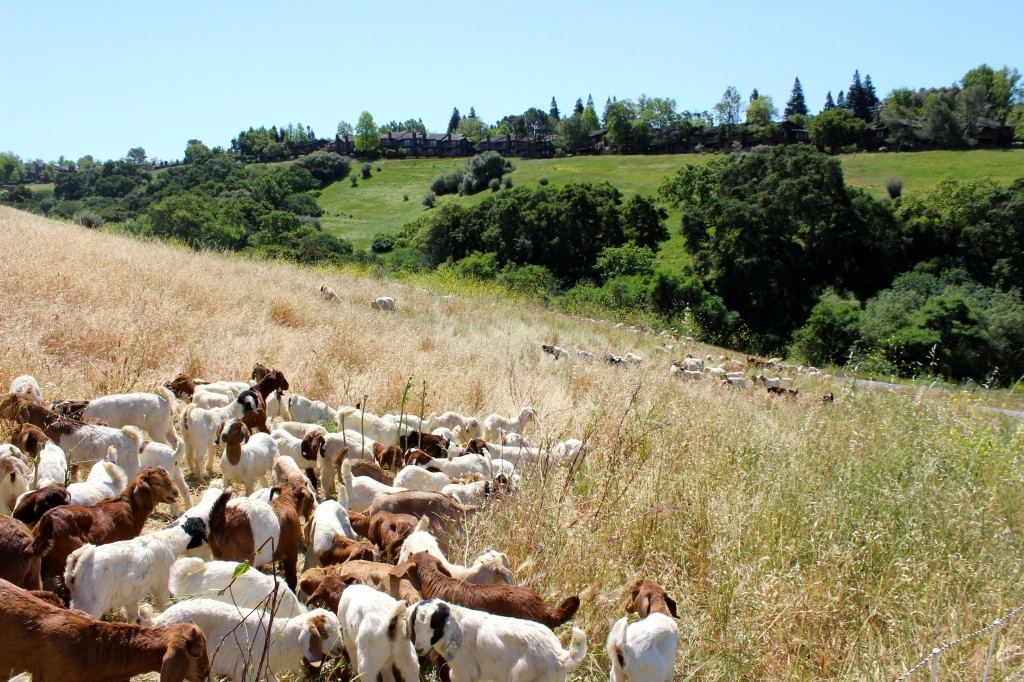
Goats have become a familiar sight on California hillsides, clearing the weeds and brush that turn into wildfire fuel. But the companies that run those herds say a change in state labor rules has made goat grazing too expensive to keep operating, according to reporting by the Sacramento Bee.
The dispute centers on how goat herders are paid. A temporary state law allowed goat herders to be paid under the same alternative minimum monthly wage structure long used for sheep herders — built around the fact that herding is a 24-hour, on-call job rather than a standard shift. That temporary fix expired July 1, 2026. Without it, grazing companies say goat herders are subject to standard overtime rules, which could push annual wage costs to roughly $240,000 per herder.
“As a business owner, we just really don’t know what the future is going to hold,” said Andrée Soares, a third-generation rancher who is president of Star Creek Land Stewards, a grazing company that employs five to fourteen herders depending on the season.
How it got here
The underlying law, Assembly Bill 1066, gradually extended overtime pay to agricultural workers, eventually entitling them to time-and-a-half for more than eight hours in a day or forty in a week. Range herders — sheep and goat herders alike — were originally carved out with a different structure: a monthly minimum wage of $2,934 in regular pay plus $1,887 in overtime, reflecting work that doesn’t fit a normal shift.
In 2022, the California Labor Commissioner’s Office determined that alternative wage applied only to sheep herders, not goat herders — exposing goat operations to standard overtime on top of the herder wage. The industry pushed back, and legislators passed Senate Bill 143, which temporarily restored parity between sheep and goat herders through June 30, 2026, while a report was prepared on the two jobs. That report, submitted to the state’s Department of Industrial Relations, concluded that “all stakeholders agree that the alternative minimum monthly wage for range herders who are on duty 24/7 should be the same for sheep and goat herders because the workers and work involved in herding sheep and goats are similar and often overlap.”
“The Legislature got this study and did absolutely nothing with it,” Soares said. “They just let [SB 143] expire.”
What’s actually at stake
Targeted grazing is now estimated to account for at least a fifth of the use of California’s roughly 500,000 sheep and 125,000 goats, and a growing share of it — cities, counties, utilities, and fire agencies increasingly hire herds specifically because goats will eat plants sheep won’t. Tim Arrowsmith, owner of Western Grazers in Red Bluff, pointed to yellow starthistle as an example: sheep will graze it only while young, but goats keep eating it even after it turns spiny and fibrous — exactly the dry, dense material that carries fire.
Without a legislative fix, Arrowsmith said he’d likely have to sell his herd by year’s end — and predicted much of it would end up slaughtered rather than sold to another grazing operation. “What are you going to do with 100,000 goats that hit the market?” he asked. Soares, who sits on the board of the California Wool Growers Association, put it more starkly for the industry as a whole: if the law isn’t changed, “all the goat producers in this state will be liquidating.”
The labor side of the dispute is real too. More than 90% of sheep and goat herders in California work under H-2A visas. Lorena Gonzalez Fletcher, who authored the original overtime law and now leads the California Federation of Labor Unions, argues herders deserve the same overtime protections as any other worker and has described conditions for some herders as isolated and demanding. The report prepared under SB 143 found only one labor-law violation potentially involving herders reported to the state between 2018 and 2024 — a fact grazing operators cite as evidence the current pay structure isn’t the abuse the wage change was meant to fix.
Where Rent A Goat stands
We’re a grazing company, so readers should weigh what follows accordingly. We think herders deserve fair, dignified pay — full stop. We also think the state’s own commissioned report already answered the underlying policy question: sheep and goat herding are comparable work and should be paid on a comparable structure. Letting that finding expire without action doesn’t protect anyone; it just risks shutting down a wildfire-prevention tool that cities and fire departments have come to rely on. We’re watching the Legislature’s next session closely, same as the rest of the industry.