How to prepare your property for a goat grazing project
A little preparation makes a grazing project faster, cheaper and safer for the herd. Here is what to do before the trailer arrives.
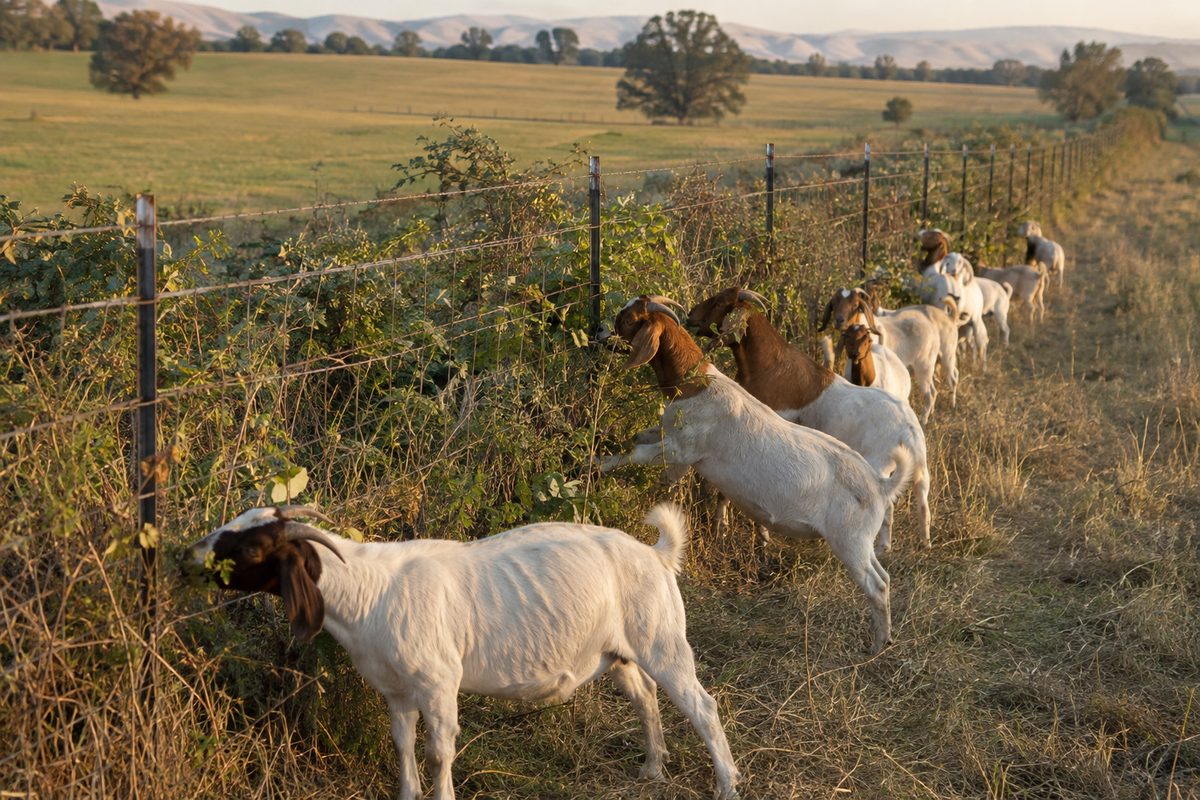
A grazing project goes best when the site is ready before the herd arrives. The herder will do a site walk and handle fencing, but a few things only you can sort out. Use this list in the week before the start date.
1. Water
- Find the spigot, tank or hose bib the herd can use. Tell your estimator where it is.
- Check that it works and that you can leave it available for the whole project.
- If there is no water, say so early. Water can be trucked in, but it affects planning and cost.
2. Access for the trailer
- Walk the route from the road to the grazing area. Look for narrow gates, low branches, soft ground and sharp turns.
- Make sure gates can open fully and are not locked on the day. Give the herder the code or key.
- Move vehicles, equipment and stored materials out of the way.
3. Hazards on the ground
Goats investigate everything with their mouths, so take away what should not be there:
- Loose wire, old fencing, netting, rope and string.
- Trash, paint, solvents, fertilizer, pesticide containers and anything chemical.
- Sharp debris and broken glass in brushy areas you already know about.
- Open pits, abandoned wells and unstable ground. Tell the herder about any you cannot remove.
4. Things you want to keep
Goats are browsers, and a hungry herd can eat ornamental shrubs, young trees and the bark of small trees as readily as weeds. Walk the site and mark anything you want left alone: garden beds, specimen plants, young trees, irrigation lines and drip tubing, signs, and anything planted for habitat or erosion control. The herder can fence these out. Flags or ribbon help.
5. Plants that can hurt goats
Some common plants are poisonous to goats, and goats do not reliably avoid them. If you know of oleander, rhododendron, azalea or similar plants on the property, tell your estimator. The herder will look for them on the site walk and fence them off. See plants that are poisonous to goats for the list and why a site review matters.
6. People, pets and neighbors
- Keep dogs inside or away from the fence line. The herd works with guard dogs that treat unfamiliar dogs as a threat.
- Tell children, guests and workers to enjoy the goats from outside the fence. It keeps the animals focused and everyone safe.
- Give neighbors a heads-up. A herd is a nice surprise for most people, but a note beforehand about dates, the guard dogs and the fence avoids calls.
- Ask your HOA or city whether a notice or permit is needed. Some places require one. See how cities run a goat grazing program.
7. Boundaries and marking
Know where your property line is, and mark it if it is not obvious. The herd should graze your land and not the next owner's. If a fence or utility runs near the edge, tell the herder.
8. Timing and weather
Peak grazing season runs roughly March through July, and the weeks before fire season book up early. Heavy rain can make access difficult, so confirm a backup date. See the month-by-month booking calendar.
What not to do
- Do not mow or spray beforehand. Herbicide residue can matter for the herd, and cutting vegetation down removes the material they are there to eat.
- Do not feed or pet the goats over the fence. Outside food can upset their diet.
- Do not move or open the fence. If something looks wrong, call the herder.
One-page summary
- Water source identified and working.
- Trailer route clear, gates unlocked.
- Trash, wire and chemicals removed.
- Plants to keep marked; toxic plants reported.
- Pets secured; neighbors and HOA informed.
- Property lines clear; backup date agreed.
The step-by-step guide shows what happens once the herd arrives.
Sources
Ready to talk about your property?
Talk to a real person about your property and get a free estimate over the phone — we serve properties across California and generally require about a 10-acre minimum per project.
Call 1-858-751-GOATRequest a Free Estimate