Goats in Rain, Heat and Cold: How Weather Changes a Grazing Project
Goats are tougher than they look, but not indifferent to weather. How heat, rain and wind shape the schedule, and why the answer is sometimes to wait.
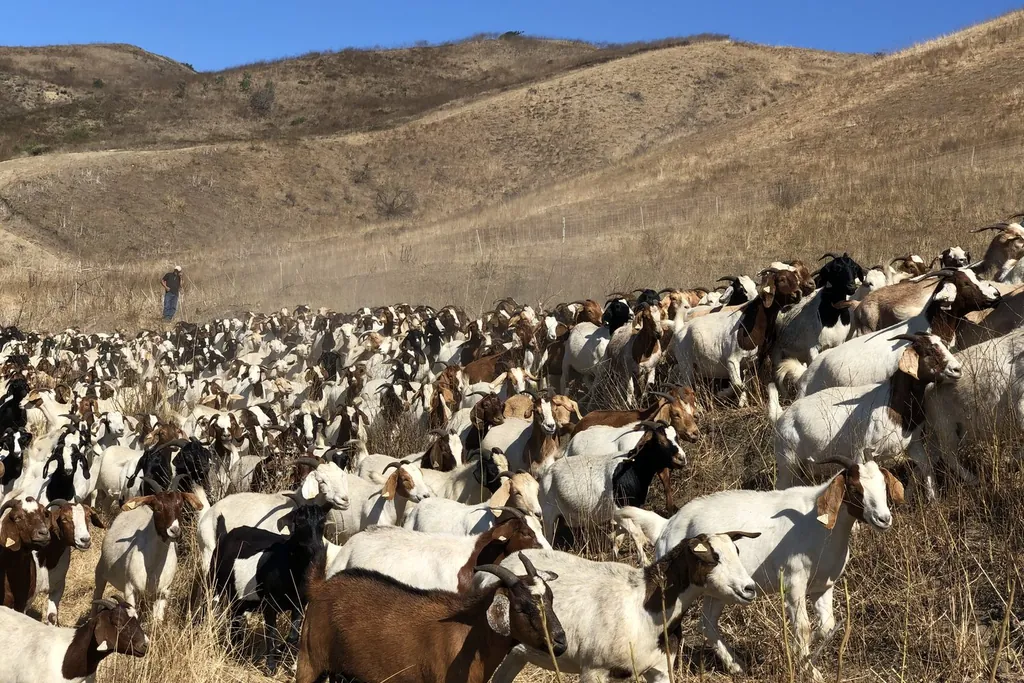
A grazing project runs outdoors, and so the weather is part of the schedule. Here is how the main conditions affect the work, and what a well-run operation does about them.
Heat
Summer is fire season, so a lot of grazing happens when it is hot. Goats handle heat better than many livestock, but they need three things: water, shade and sensible hours. Plan on the herd drinking more in hot weather, which is why water supply is one of the first questions on a site visit. See how much water a herd needs.
On very hot days, animals tend to graze early and late and rest in shade in the middle of the day. A job in open country with no trees may need portable shade or a shorter work window. If a quote assumes shade that is not there, ask about it.
Rain and mud
Goats do not like getting wet and will seek shelter in a storm. Light rain does not stop a project. Heavy rain, saturated ground and mud do slow it:
- Trailers and trucks can bog down on soft ground, which affects delivery and pickup.
- Hooves on wet, bare slopes can scuff the soil, so herd moves are managed more carefully.
- Electric fence performs worse when the vegetation touching it is wet. A herder checks that it is still working.
That is one reason most grazing for fire fuel is scheduled for the dry season, and why spring grazing, when the ground is still soft, calls for more care.
Cold
Cold, wind and rain together are harder on goats than cold alone. Winter grazing is less common in much of California because there is less growth to eat, but it does happen in some regions and on some kinds of vegetation. Animals need a dry place to rest and enough to eat, since they burn more energy to stay warm.
Wind and red-flag days
High wind and low humidity are fire-weather conditions. The herd itself does not cause fire danger, but electric fence and vehicles on dry grass do deserve respect on those days. A careful operator pays attention to red flag warnings and adjusts work accordingly. Ask how your provider handles them.
Smoke
During wildfire smoke events, animals are affected too. If air quality is bad, a herder may reduce activity and keep the animals closer to water and shade.
What this means for you
- Expect that dates can shift. A reasonable quote says what happens if weather delays the herd.
- Make sure the herd has a way in and out in wet weather.
- Do not push a company to graze in conditions it does not like. The animals come first, and a stressed herd does a worse job.
For help picking the right season, see when to book goat grazing in California.
Sources
Ready to talk about your property?
Talk to a real person about your property and get a free estimate over the phone — we serve properties across California and generally require about a 10-acre minimum per project.
Call 1-858-751-GOATRequest a Free Estimate