
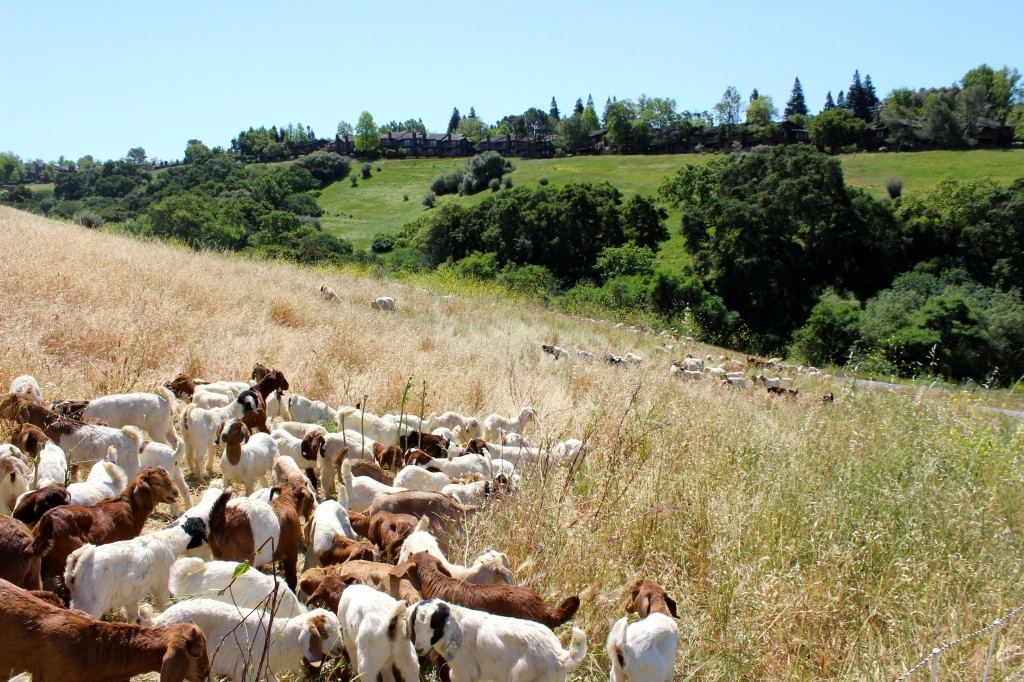
The basic numbers, and what moves them
A goat typically drinks somewhere in the range of half a gallon to a gallon and a half of water per day depending on body size, temperature, and how much moisture is already in the forage it's eating — a herd grazing green, moisture-rich brush needs meaningfully less supplemental water than one working dry, cured summer grass in triple-digit heat. Multiply that by herd size and project duration and a two-week project for a hundred-plus animal herd adds up to a genuine daily logistics requirement, not an afterthought.
Temperature and workload push those numbers up fast: a herd working in August heat on steep terrain drinks considerably more than the same herd on a mild spring day, which is one more reason professional operators plan project timing and herd size together rather than treating them as separate decisions.
What happens when a property has no on-site water
A spigot or trough source on-site is ideal, but its absence doesn't automatically disqualify a property — professional operations regularly haul water to sites via tank trailers, refilling on a schedule sized to herd count and weather. It adds cost and logistics, which is one of several factors (along with access, fencing needs, and terrain) that go into a project estimate, but it's a solvable problem rather than a hard stop.
What actually matters most is telling the estimator up front whether water is available — that single detail changes herd-size planning, project timeline, and pricing more than almost anything else in the site assessment.