
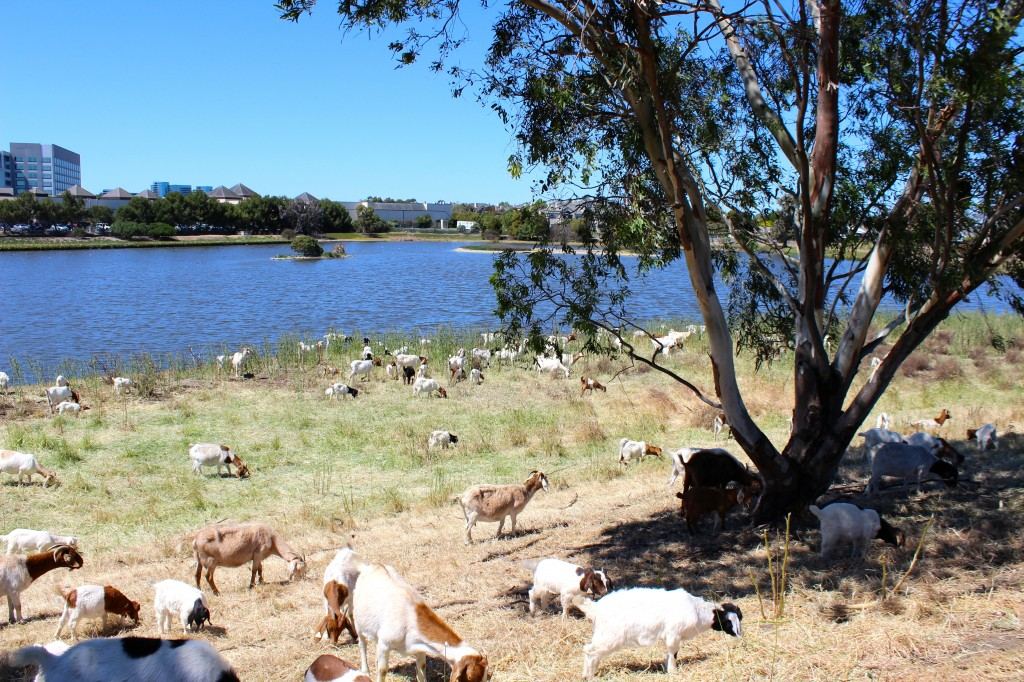
A mobile herd, run by two alumni
West Coast Grazing is a mobile regenerative grazing operation based in Pescadero, California, run by two Colorado State University graduates: Brittany Messinger, who finished in the Warner College of Natural Resources in 2015 in parks and protected area management, and Andrew Bowler, an animal science graduate from the College of Agricultural Sciences in 2018. CSU’s Warner College profiled them in April 2026.
The operation runs roughly 200 goats and sheep behind temporary fencing, rotating through residential properties, public lands and farms across California. The premise is straightforward substitution: livestock in place of machinery and chemicals for managing invasive vegetation, reducing wildfire fuels, and restoring ground that has been mowed, sprayed or neglected.
“We saw a need for more environmentally responsible ways to manage land,” Messinger said.
What the hooves do
The interesting part of the CSU piece is not the eating — it is the ground. Goats reach terrain machines cannot without disturbing soil, and their hooves soften topsoil in a way that lets seed make contact and germinate. Over repeat visits, the operation reports increases in soil organic matter: the herd is not only removing fuel, it is changing the substrate that decides what grows back.
That distinction matters when comparing grazing to mastication or mowing. A machine leaves a mulch layer and compacted, often disturbed soil. A herd leaves cropped material, broken seed, manure, and a lightly scarified surface. The vegetation that returns after each is not the same vegetation, which is why single-visit cost-per-acre comparisons tend to mislead.
The animals also remember. The CSU profile notes the herd recalls landscapes across years — an operational advantage on repeat contracts that does not appear anywhere on an invoice.
The contracts
Two projects illustrate the range. West Coast Grazing has worked with the Tachi Yokut Tribe on heritage lands, and has run a 235-acre project at Beale Air Force Base where the management objective included protecting endangered fairy shrimp — vernal pool crustaceans whose habitat is precisely the kind of seasonally wet, ecologically brittle ground where heavy equipment is a poor fit.
Federal and tribal work of that type is where targeted grazing has quietly matured. The buyer is not looking for a novelty; they are looking for a fuel-reduction method that will survive an environmental review on sensitive habitat. Our earlier coverage of federal agency grazing programs and the NRCS prescribed grazing standard covers how those specifications are typically written.
The labor reality behind it
Messinger’s description of the work is the same one that drove this year’s legislative fight in Sacramento: “Goat herding means living in sync with the seasons. It requires 24/7 attention.”
That sentence is the whole wage argument in miniature. The job does not resolve into shifts, which is why California built an alternative monthly wage structure for range herders in the first place, why the lapse of parity between sheep and goat herders in July put operations like this one at risk, and why the fix passed on August 31 matters to every small mobile herd working in the state.