Three species, three grazing styles
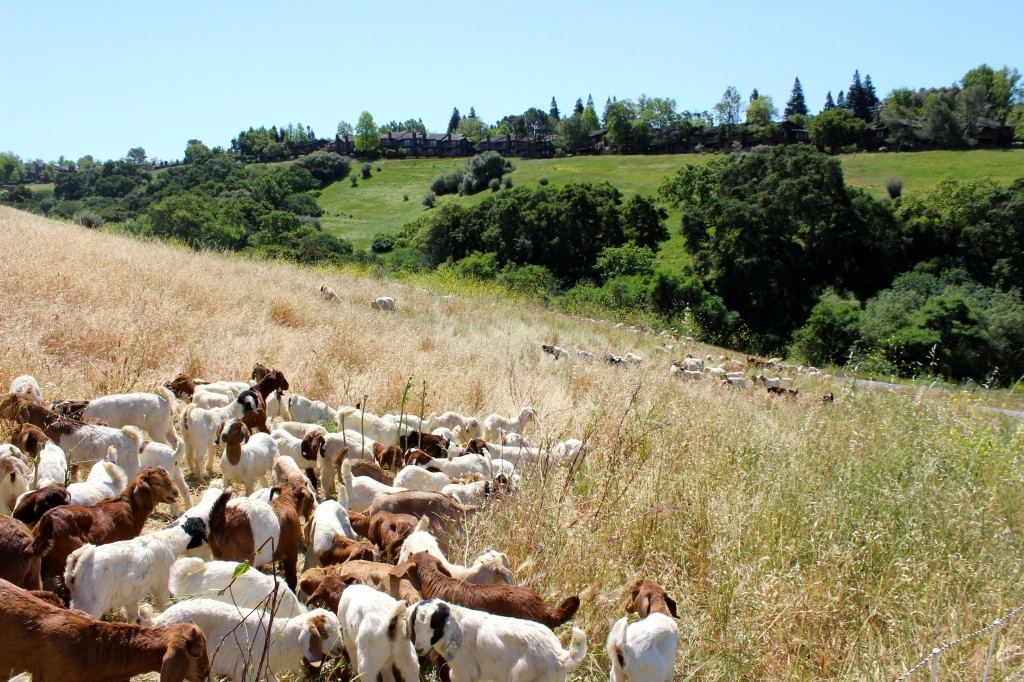
Goats are browsers: they prefer woody brush, vines, and broadleaf plants, eating upward to roughly shoulder height, and tolerate the bitter tannins in plants like blackberry and poison oak that other livestock avoid. Sheep are grazers with a strong preference for grasses and broadleaf weeds close to the ground — excellent for fine-fuel reduction on open, grassy terrain, but far less effective on woody brush than goats. Cattle are also grazers, built for large-scale, heavier forage on flatter, more open rangeland, with less precision and much greater size and weight than either goat or sheep operations.
Why the choice depends entirely on the job
A brushy, steep hillside covered in blackberry, scrub, and poison oak is squarely goat territory — sheep will pick at the edges and leave the woody core largely untouched. A flat or rolling open-space parcel dominated by dry grass, by contrast, often suits sheep better and can graze faster and cheaper per acre than goats, which will spend time on brush that isn't even present. Cattle rarely fit the kind of small-parcel, precision fuel-reduction work most targeted-grazing clients need, and are more common on large open rangeland managed for forage production itself.
Many properties benefit from running species together or in sequence — sheep clearing fine grass while goats work the brush layer above them — which is why professional operators size up vegetation type before recommending a species, rather than defaulting to whichever animal they happen to specialize in.