Why breed selection matters for working herds
Dairy breeds like Nubians or Alpines are bred for milk production and tend to be more selective, less hardy on rough terrain, and more valuable per animal — none of which suits a job that means climbing steep slopes, eating brush and poison oak, and living outdoors for days or weeks at a stretch. Professional grazing operations instead lean on meat and landrace breeds selected over generations for exactly that kind of hardiness.
The breeds that actually do the work
Boer goats, developed in South Africa, are a common choice for their size, calm temperament, and strong foraging drive on brush. Kiko goats, developed in New Zealand specifically for hardiness with minimal management, are prized for parasite resistance and the ability to thrive on rough, low-quality forage without much supplemental care. Spanish goats, a landrace breed with roots in Spanish colonial-era stock long established in the American Southwest, are especially valued for aggressive browsing on thick brush and resistance to regional parasites and diseases.
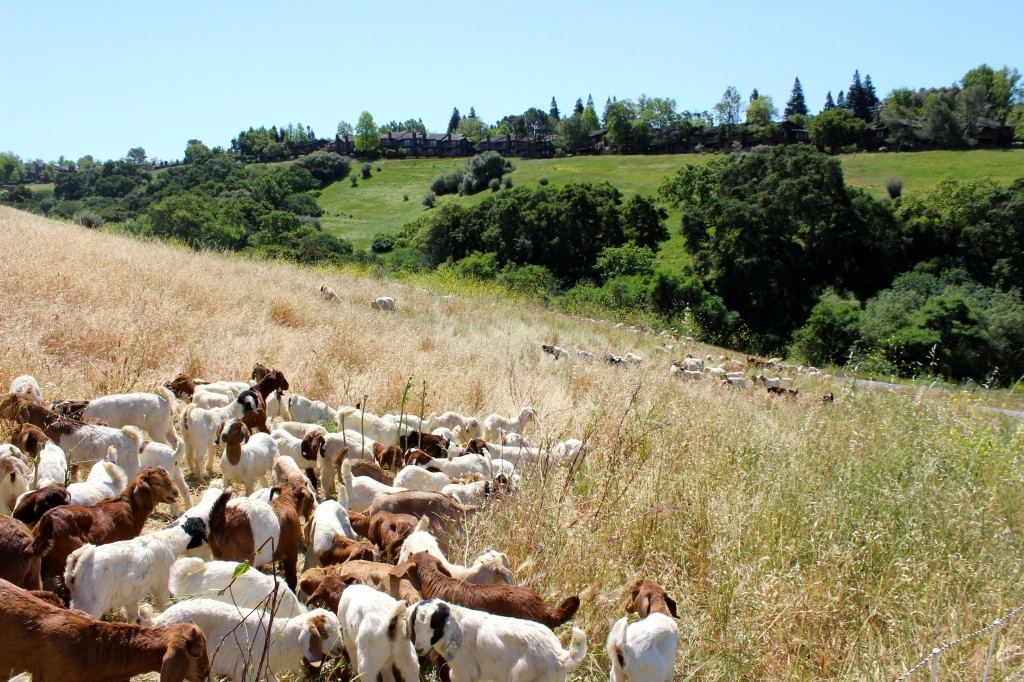
Many working herds are actually crossbreeds rather than purebred stock — operators select for the traits that matter (hardiness, foraging drive, parasite resistance, temperament around fencing and guardian dogs) more than pedigree, which is why a professional herd often looks visibly mixed rather than uniform.