
The weed that threatens your horse is lunch for a goat
The weed that can kill your horse is lunch for a goat. Here's how horse-property owners clear yellow starthistle — without spraying the pasture their horses graze.
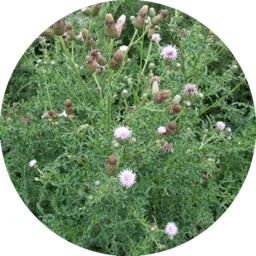
Every California horse owner eventually learns about yellow starthistle the hard way — a vet visit, a worried neighbor, or the yellow tide creeping across the back pasture. It infests millions of California acres, it's armed with inch-long spines, and for horses specifically, it's poison. Here's the problem, and the four-legged solution that doesn't involve spraying chemicals where your horses graze.
Why starthistle and horses don't mix
Prolonged ingestion of yellow starthistle causes nigropallidal encephalomalacia — "chewing disease" — a neurological condition unique to horses that destroys the brain regions controlling chewing and swallowing. It is incurable and typically fatal. Horses usually avoid the plant when better forage exists, but eat it when pasture runs thin in late summer — exactly when starthistle is often the only green thing standing — or when it sneaks into hay. UC Davis veterinary guidance treats it as one of California's most serious plant threats to horses.
Why goats are the elegant fix
The toxin only affects horses — ruminants digest starthistle without harm, and goats and sheep browse it readily, spines and all. That makes targeted grazing uniquely suited to horse properties, for three reasons herbicides can't match:
- No chemicals in the pasture. No spray residue where your horses graze, no re-entry intervals, no drift onto water troughs or hay storage.
- Timing that cuts the seed bank. Grazed in the bolting-to-early-flower window (late spring into early summer), starthistle loses both the standing plant and most of next year's seeds — the UC-recognized control approach. Repeated annually, infestations shrink measurably.
- It works on the ground horses ruined. Starthistle thrives on overgrazed, compacted horse paddocks and dry lots. Goats clear it while the resting pasture recovers.
How it works on a horse property
Same process as every project — temporary electric netting, water, guardian dogs, daily herder checks — with one extra step: we fence the goats and your horses apart. The netting that keeps goats in keeps horses out, and rotations are planned so horses never share ground with the working herd. Most horse-property projects run the infested pastures, fence lines, and back acreage section by section while horses stay on their regular turnout.
One caveat we'll always give straight: if your horses are already showing symptoms, that's a veterinary emergency, not a grazing project. Grazing is prevention — it removes the threat before the ugly month when starthistle is the last green plant in the pasture.
The bottom line
Starthistle control on horse land is the rare case where the safest method and the most effective method are the same one. If yellow is spreading across your pasture, send us photos — spring timing books out, and the best pass is the one before seed set. More on the plant itself in our starthistle library entry.
Sources
- UC Davis School of Veterinary Medicine — Yellow star thistle & Russian knapweed poisoning in horses
- UC IPM — Yellow starthistle management (Pest Notes)
- UC ANR — Yellow Starthistle Management Guide (grazing chapter)
Yellow taking over the pasture? Send photos.
Talk to a real person about your property and get a free estimate over the phone — we serve properties across California and generally require about a 10-acre minimum per project.
Call 1-858-751-GOATRequest a Free Estimate