
Where goat grazing is catching on across California
Goat grazing has gone from novelty to mainstream land-management tool in California. Here is a look at the cities, counties, and utilities putting herds to work.
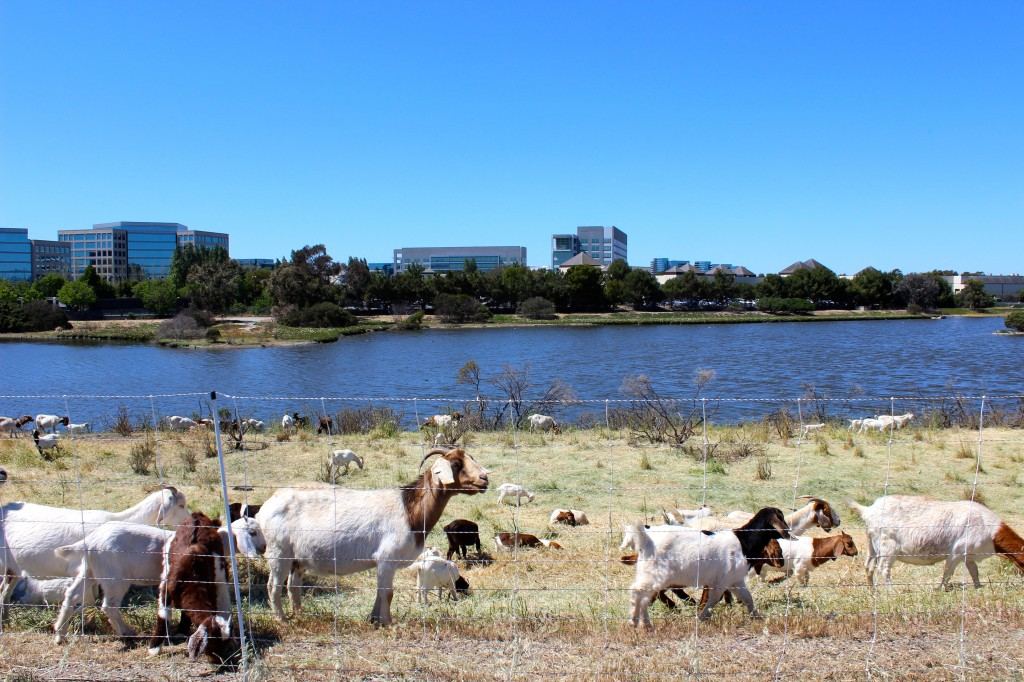
Targeted grazing is an old idea — herds clearing brush long predates chainsaws and herbicides. But after a decade of record-breaking fire seasons, California communities have brought it back in a big way. Goats are now a routine sight on hillsides, greenbelts, and utility corridors each spring and summer. Here's a tour of who's using them and why.
Fire departments and cities
Southern California fire agencies have been among the most visible adopters, contracting herds to graze brush in the wildland-urban interface — the flammable edge where neighborhoods meet open space. Reporting has documented goat-grazing programs tied to cities and fire departments including Glendale, Anaheim, and communities across Los Angeles and Orange counties, along with private estates in fire-prone hillside areas. Farther north, Oakland has deployed goats as part of its strategy to reduce fire-fuel hazards before summer.
Counties and parks
County governments use grazing on open space and along drainage channels. Placer County, for example, publicly promotes goats as a way to reduce wildfire risk on hard-to-reach terrain, and cities like Chico have run defensible-space projects — such as grazing the Lindo Channel — funded in part by FEMA hazard-mitigation grants. Santa Clarita has deployed large herds to clear dozens of acres in local canyons.
Utilities
Utilities face enormous wildfire liability around their equipment, and several have turned to grazing to keep vegetation down along rights-of-way. San Diego Gas & Electric, among others, has expanded goat grazing to help manage fuel near infrastructure — a low-emission alternative to mowing miles of brushy corridor.
Universities and researchers
The interest isn't only operational. Stanford's Jasper Ridge Biological Preserve and Cal Poly have studied and used goats as a fuel-reduction tool, helping build the evidence base for how, where, and how often grazing works best. (We summarize that research in do goats really help prevent wildfires?)
Why it's spreading
The appeal is consistent across all these users: goats work on steep and rocky ground that's dangerous for machines, they leave no cut debris to haul, they use no herbicides near sensitive waterways, and they run on grass instead of gasoline. For agencies trying to create defensible space across large, difficult landscapes, that combination is hard to beat as a first pass and a seasonal maintenance tool.
The bigger picture: a growing industry
The broader "rent-a-goat" model has grown alongside the demand. Conservation-grazing operators now run herds numbering in the thousands and serve public agencies, utilities, and private landowners statewide. Rent A Goat provides brush clearing across California — from the Sierra Nevada and the Central Valley to the length of the Pacific Coast — sizing herds to each project and returning seasonally to keep regrowth in check.
Sources
- NPR (2023) — How goat grazing helps fight California wildfires
- Placer County, CA — Goats reduce wildfire risk
- KRCR — Goats deployed for fire prevention in Chico's Lindo Channel
- Piedmont Exedra (2025) — Oakland deploys goats to reduce fire-fuel hazards
- Stanford Jasper Ridge — Nature's fire-fuel reducers
Ready to clear your property naturally?
Talk to a real person about your property and get a free estimate over the phone — we serve properties across California and generally require about a 5-acre minimum per project.
Call 1-858-751-GOATSee how it works