
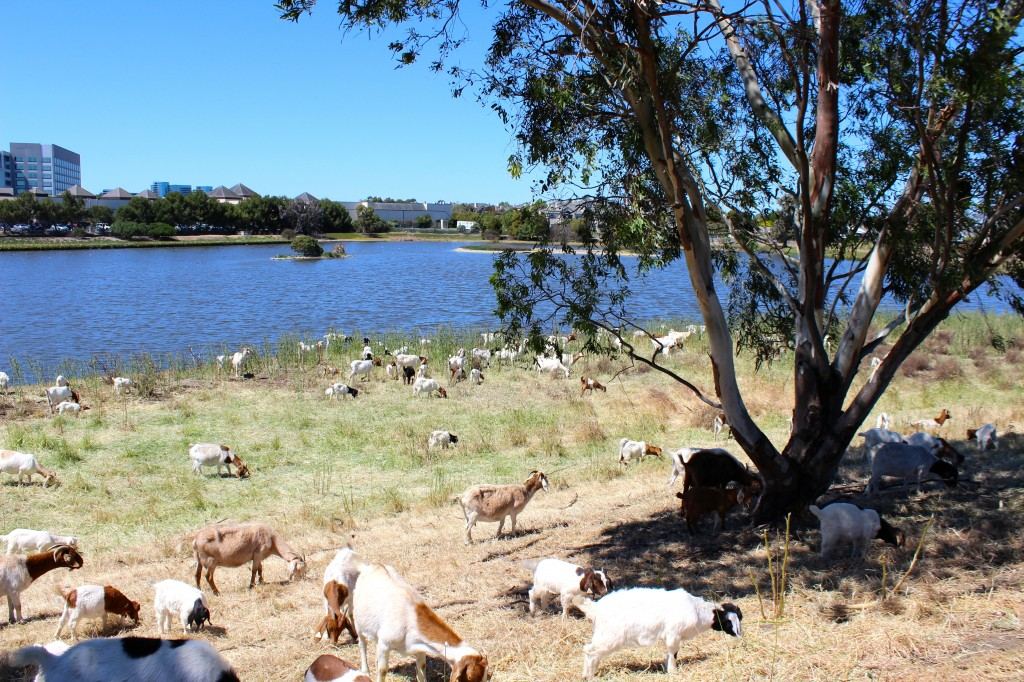
Grazing as fire defense in the vineyards
Across Napa and Sonoma, operators now bring flocks of sheep and herds of goats onto residential and vineyard properties specifically to reduce wildfire susceptibility. The logic is simple: keeping land clear of dry weeds, grass, and brush removes the fine fuels that let fire spread fast.
Because sheep graze grasses head-down while goats browse brush and leaves like deer, operators often combine the two — sheep for open oak-grassland, goats for dense undergrowth.
Evidence from the fire lines
Wine-country grazing advocates point to striking anecdotes from recent fires: grazed oak woodland that survived with minimal tree loss while neighboring ungrazed parcels lost an estimated 60–70% of their trees, and areas where fire reportedly ran out of fuel at grazed property lines during the Nuns Fire.
These are observations, not controlled experiments — but they align with the broader research that grazed land tends to burn less severely.
The dual payoff for growers
Beyond fire, vineyard grazing replaces tractor passes and herbicide, cutting equipment emissions while the animals fertilize the soil. For growers in a fire-prone region, it’s risk reduction and land stewardship in one.
It’s also why "wine country" has quietly become one of California’s most active targeted-grazing markets.