The problem with turning a herd loose
Left with an entire property to roam, goats behave the way any browsing animal would: they eat the most palatable, easiest plants first, wander toward whatever looks best next, and leave large sections lightly touched while a few favorite patches get grazed repeatedly. That produces a patchy, cosmetically uneven result — exactly what a paying property owner or fire agency doesn't want.
The fix, borrowed directly from rotational-grazing range science, is to divide the project area into smaller sections — "cells" — using portable electric netting, and let the herd graze one cell thoroughly before the fence moves them to the next.
Stocking density is the actual dial
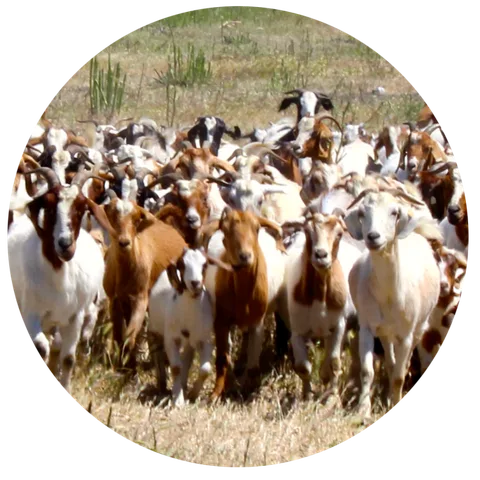
The key variable professional herders manage isn't just fence placement — it's stocking density: how many animals are packed into a given cell at once. A high density of goats in a small cell for a short time produces thorough, even grazing, because there's more competition for each plant and less opportunity to be selective; a low density over a large area produces exactly the patchy result cells are meant to avoid.
Cell size and dwell time get adjusted daily based on vegetation density, terrain, and how fast the herd is working — a light grass cell might clear in a day, while a cell full of dense blackberry or poison oak can take several. That daily adjustment is the actual craft of professional herding, more than the fencing hardware itself.