
It started as range science, not a novelty service
Livestock have been used deliberately to manage vegetation for as long as ranching has existed, but "targeted" or "prescribed" grazing — using specific animals, timing, and stocking density to hit a defined vegetation goal rather than just produce meat or fiber — became a formal discipline within range management science in the mid-to-late 20th century, as researchers studied how grazing pressure could control specific weeds and shrubs on Western rangeland.
The USDA's Natural Resources Conservation Service eventually codified this into Conservation Practice Standard 528, "Prescribed Grazing," which defines the planned, managed harvest of vegetation by livestock to meet specific land-management objectives. That standard is still the technical backbone referenced in grants and agency contracts today, including California's own funding programs.
The urban "rent-a-goat" business is the newer story
The idea of hiring a herd for a single residential or commercial property — rather than running livestock as a full-time ranching operation — took off starting in the 1990s and 2000s, as small operators in California, the Pacific Northwest, and elsewhere realized that homeowners, cities, and utilities would pay for short-term brush and weed control on land too steep, rocky, or fire-prone for mowers.
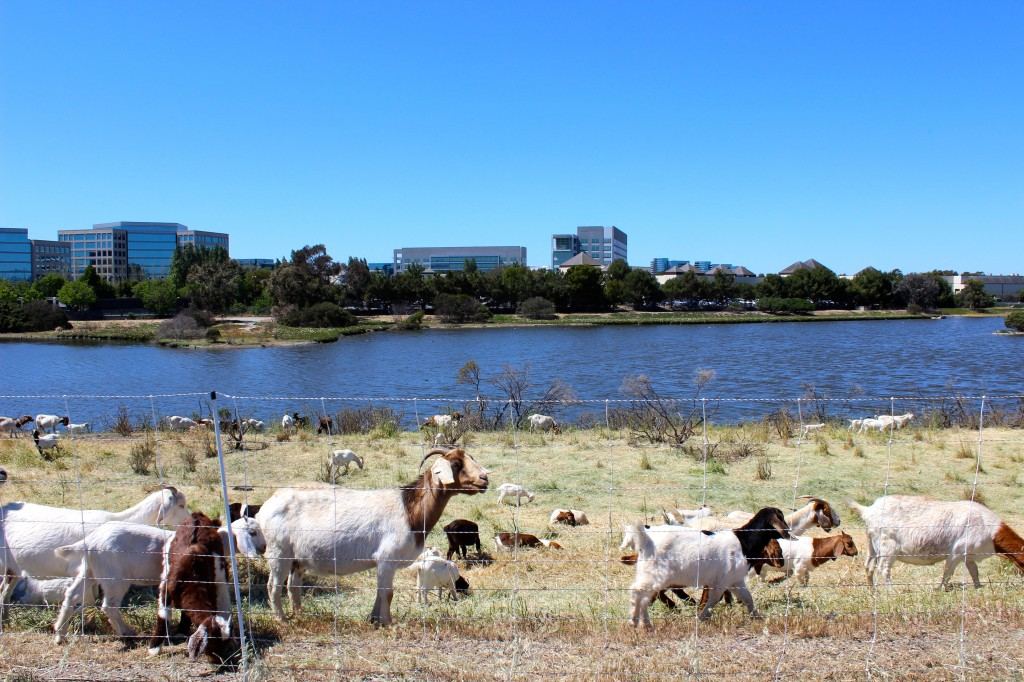
Media attention accelerated the trend: local news segments about "goats on the loose" clearing an overgrown lot became a recurring, shareable story format through the 2000s and 2010s, and appearances like Shark Tank introduced the concept to a national audience. What had been a niche rangeland technique became a mainstream vegetation-management option that fire departments, HOAs, and Fortune 500 campuses now budget for on purpose.