
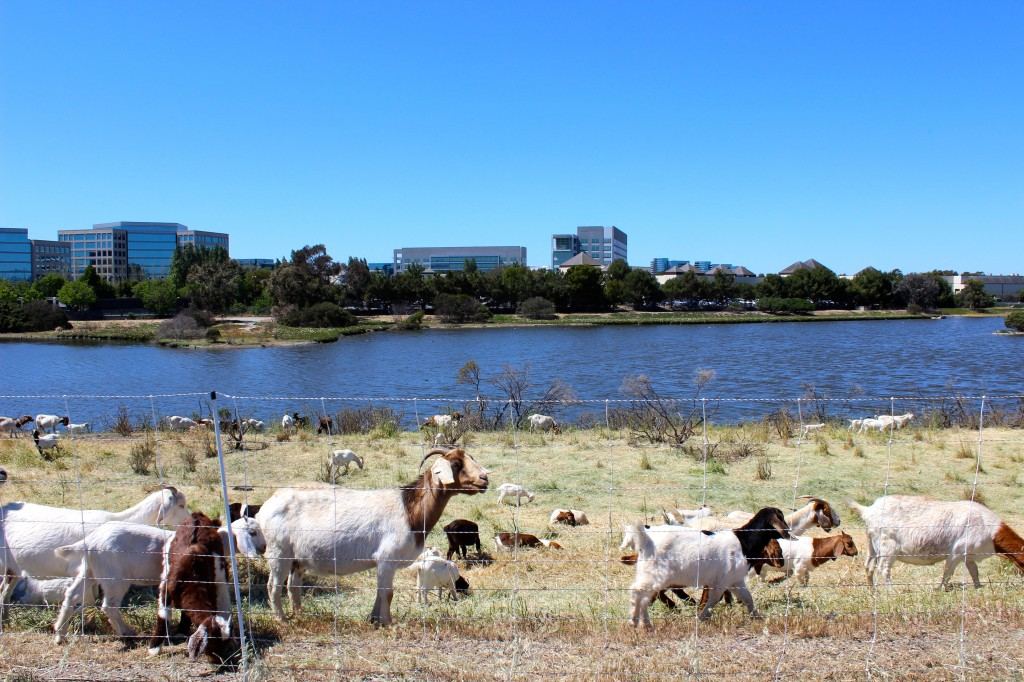
A low-carbon lawn crew
In the spring of 2009, Google hired a local grazing company to bring roughly 200 goats to its Mountain View headquarters for about a week. The goats grazed down the grass and brush on fields around the campus — and fertilized as they went.
Google framed it as a lower-carbon alternative to gas-powered mowers: the goats were quieter, produced no exhaust, and, in the company’s words, were a lot cuter than a lawnmower. A herder and a border collie named Jen kept the herd in line.
Why it resonated
The move drew national coverage and helped popularize "conservation grazing" for corporate campuses. It signaled that grazing wasn’t just for ranches — it could manage vegetation on high-profile commercial property while sending a visible sustainability message.
More than fifteen years later, Google’s goats remain the reference point nearly everyone reaches for when explaining what targeted grazing is.