
The property
Jerad and Emily Cummins owned 12 acres of woodland near Lawson, in Ray County, Missouri, that was between 50 and 85 percent covered by invasive brush — bush honeysuckle, autumn olive and multiflora rose, the standard midwestern trio that turns an open understory into an impassable wall in a decade.
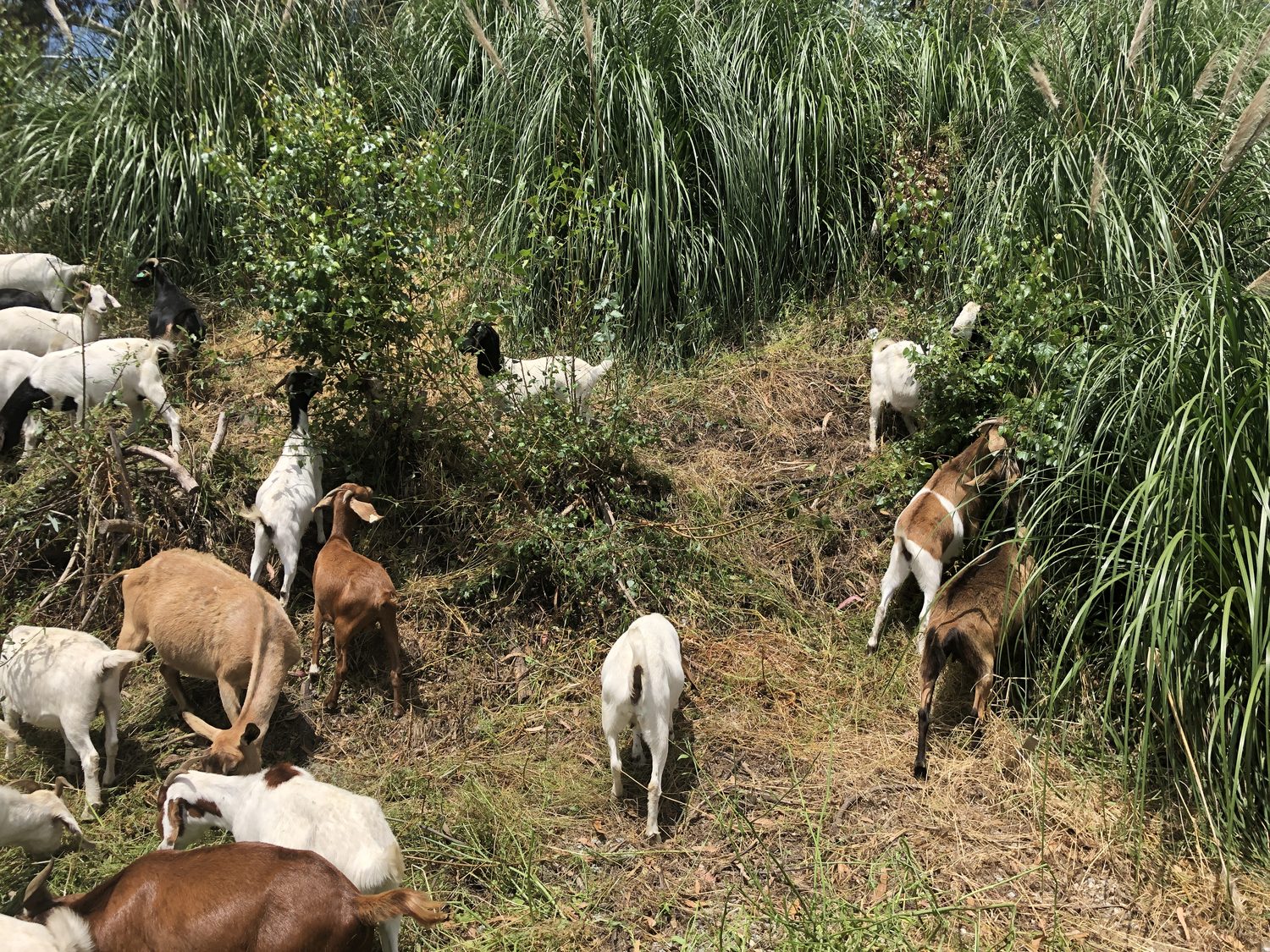
The USDA Natural Resources Conservation Service documented what happened next in a 2017 account by public affairs officer Charlie Rahm. The Cumminses hired Goats on the Go, the Iowa-based operation that had been building an affiliate network across the Midwest, and 358 goats went into the woods.
Their reason for not spraying was not ideological. “We didn’t care for a chemical option,” Jerad Cummins said. “We walk in the woods. The kids play in the woods.”
The throughput
The herd consumed roughly a ton of brush per day and cleared the 12 acres in two weeks. That is a useful benchmark to carry around: it puts a number on what a large herd actually does to woody understory, as distinct from the pasture-and-weeds work most people picture.
“The good thing about the goats is that they are low-impact,” Cummins said — the point being that on wooded ground, the alternative is either a chemical program or machinery that damages the soil, the roots of the trees being kept, and everything else in the understory worth saving.
The part everyone skips: the return visits
The plan did not end with the two weeks. The goats were scheduled to come back twice the following year to stunt regrowth — because honeysuckle, autumn olive and multiflora rose all resprout vigorously from established root systems, and a single visit removes the standing biomass without touching the plant’s ability to rebuild it.
Aaron Steele of Goats on the Go framed the first pass as leverage rather than a finish: “One of the best things about goats is their ability to help a landowner get a foothold on a problem they thought was insurmountable.” That is the accurate claim. Repeated defoliation over two or three seasons drains root reserves; one dramatic clearing does not. Any operator who promises a permanent result from a single visit on woody invasives is overselling, and the property owner is the one who finds out a year later.