
Carving an exception out of a livestock ban
Central Point, Oregon — a city of roughly 20,000 in the Rogue Valley, just north of Medford — currently bans horses, cows, goats and animals “raised for commercial purposes” inside city limits. An ordinance moving through its city council would carve out one exception: the keeping of goats for the sole purpose of targeted grazing of vegetation.
The limits are written into the measure. Grazing would be capped at 21 consecutive days per penned area, or per property where the parcel is under half an acre, and the ordinance would take effect 30 days after approval. It passed its first reading 6-0 at a July 16 meeting, and the Rogue Valley Times reported on August 26 that a final vote was set for that Thursday, August 27. City records cited in that reporting note goats are particularly effective at eliminating blackberries, and point to fire suppression as a reason to allow them.
Central Point would not be first in the region. Medford and Salem already have goat-grazing ordinances on the books. Editor’s note: as of publication we have not found published reporting confirming the outcome of the August 27 final reading. We will update this article when the council record is available.
The operators the ordinance would open the city to
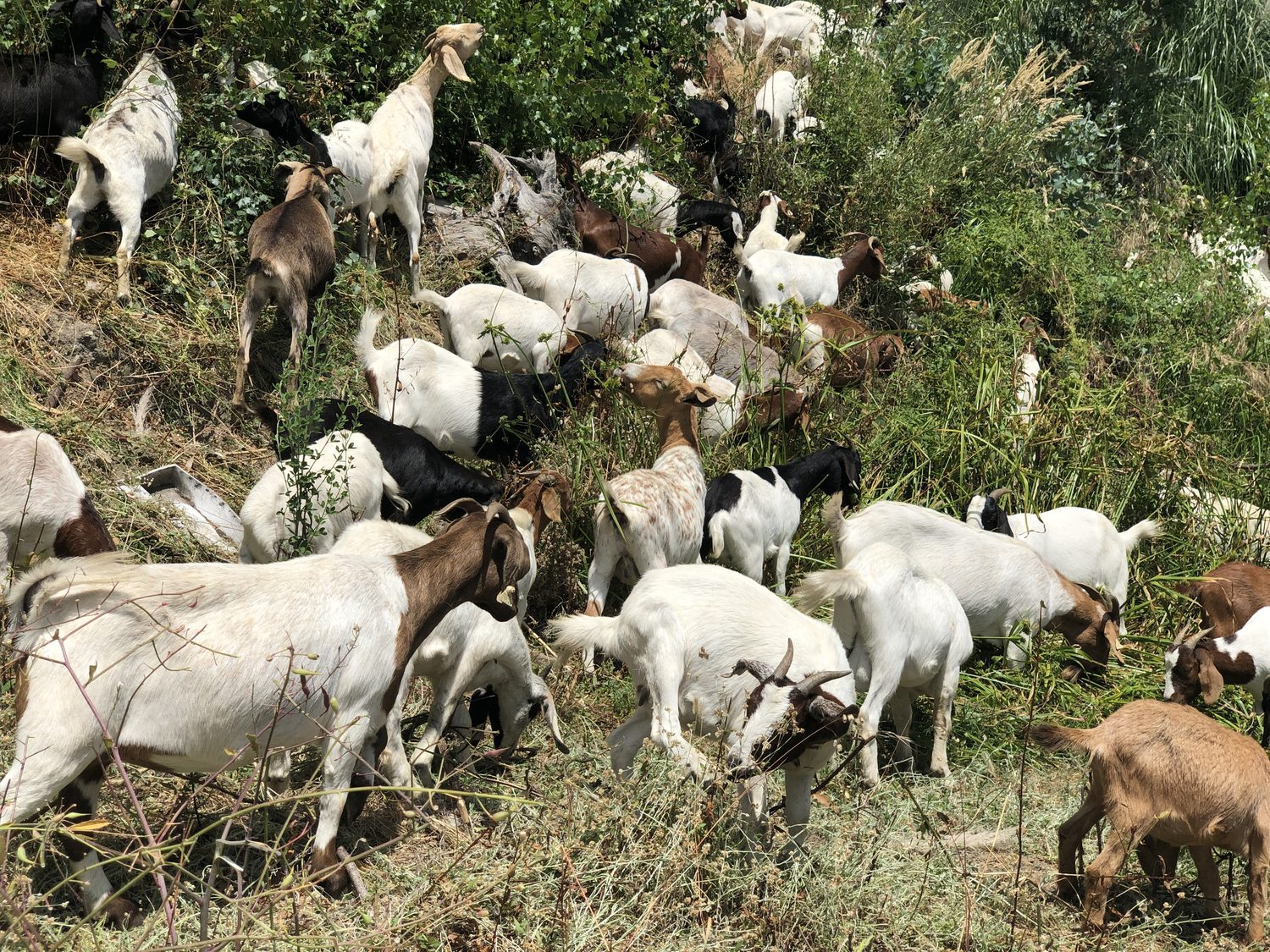
The business waiting on the other side of the vote is small and very new. Summer and Monte Wissel of Grants Pass started with nine goats in March 2026. By late August they were running two herds — one of 24 goats, another of 19 goats and two sheep — at $300 a day, and were booked through October.
“I placed an ad on Facebook and, that day, I had over 200 people asking to rent the goats,” Summer Wissel told the Rogue Valley Times. “Now we have two separate herds … and we run both of them every day.” The herds cover roughly a quarter to a half acre daily, depending on how dense the foliage is.
Demand has outrun the service area. The Wissels have taken calls from as far as Yreka, California and Portland, but are still working only the Rogue Valley — a constraint that has less to do with interest than with the logistics of moving animals, fencing and daily care over distance.
Solar fence, twice-daily checks, baking soda
The operational picture in the article is a useful corrective to the idea that goat grazing is a drop-off service. The Wissels transport the herd, install solar-powered electric fencing, and check the property twice a day for water, minerals and baking soda — the last of these to prevent bloat, a real and fast-moving risk when animals move onto rich new forage.
Summer Wissel described the agronomic side of what the herd leaves behind: “When goats go in and they (graze on) brush and poison oak and blackberries, they remove the seeds… and then they fertilize your ground.” Seed destruction in the rumen is the part property owners tend to underestimate — it is the difference between cutting a blackberry stand and setting it back.
Why municipal code is the real gate
Stories about goat grazing usually focus on fire risk or cost per acre. In practice, the thing that most often decides whether a homeowner inside city limits can hire a herd at all is a municipal code written decades ago to keep livestock out of neighborhoods — with no category for an animal that arrives Tuesday and leaves in three weeks.
Ordinances like the one in Central Point do something narrow and useful: they distinguish keeping livestock from contracting vegetation management. The 21-day cap, the fencing requirements, and the effective-date lag are the mechanics that let a city say yes without inviting permanent backyard herds. For operators and property owners in California facing the same question, our defensible space and project-planning guides cover what typically has to be in place before a herd shows up.