The project
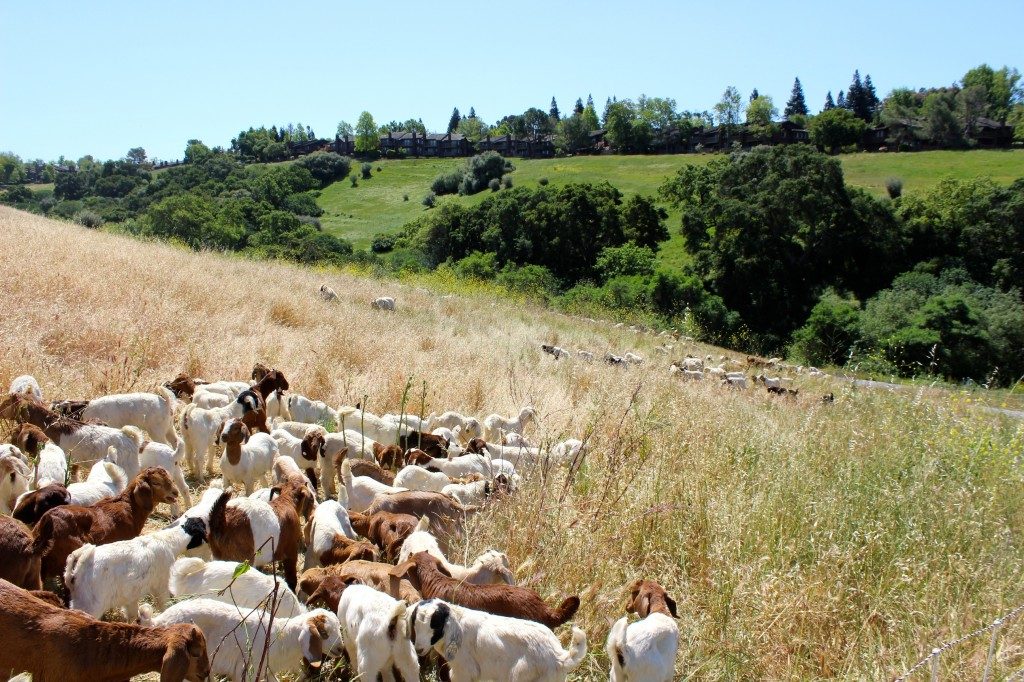
The Bureau of Land Management’s California office reported in May 2026 on a targeted grazing project in the Sacramento River Bend area, north of Red Bluff. The herd was large by public-land standards: 750 goats, deployed beginning in early February and worked across roughly six weeks in the Oak Slough and Jelly’s Ferry areas.
The targets were invasive thistles, annual weeds, blackberry and medusahead — the last a particularly stubborn annual grass that forms a dense, silica-rich thatch, crowds out native forage, and cures early into fine fuel. Crews used temporary fencing and moved the herd through in small sections, routing around sensitive locations and keeping conflicts with trail users to a minimum.
Devonie Plummer, a rangeland management specialist with the agency, was named as leading the effort.
What they reported
BLM described the early results as encouraging: by the end of the season, staff reported a significant reduction in thistles and annual weeds in key areas of the site. The secondary benefit was access — thinner ground cover made trails more usable for hikers, horseback riders and mountain bikers, and improved sightlines for wildlife viewing along a stretch of river where river otters, beavers, osprey, bald eagles, deer and turtles are all common.
That access outcome is worth naming honestly, because it is often the reason a public land manager can fund grazing at all. Fuel reduction and recreation improvement are the same line item on this kind of project.
Why the timing matters more than the herd size
Early February is the detail to notice. Targeted grazing against annual invasives works on phenology: hit the plant while it is green and actively growing, before seed set, and you draw down the seed bank as well as the standing fuel. Wait until the material has cured and you are removing this year’s fuel while leaving next year’s crop intact.
A herd of 750 sounds like the headline, but the scheduling is what produced the result. For property owners in California weighing the same question, our guide on when to book goat grazing walks through how that calendar works against local species — and why the best window is usually earlier than people expect.