
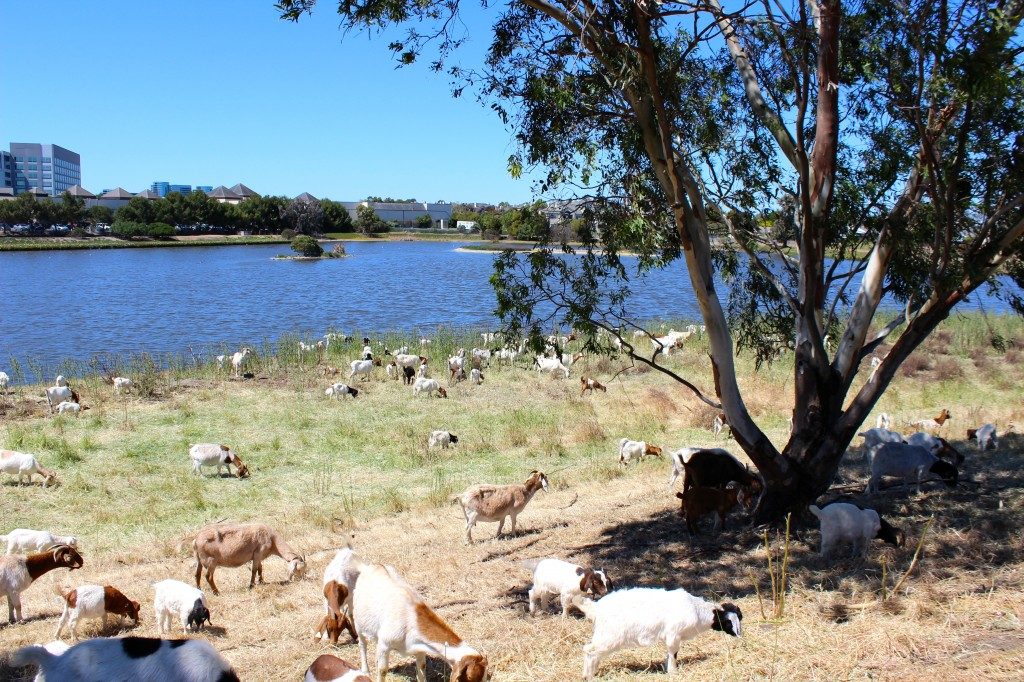
The same service, 8,000 miles away
Meat & Livestock Australia, the producer-funded industry body, published an account in February 2025 of goat rental operating in the coastal zone of south-east New South Wales. The scale is small and deliberate: a herd of roughly 30 animals, hired out for three to four months a year, working the Bega Valley and as far as Lake Burley Griffin in the Australian Capital Territory.
The target list translates almost directly from the North American one. Blackberry — the same Rubus problem that dominates Pacific Northwest and Northern California work. Fireweed, privet, and wandering trad (Tradescantia fluminensis), a dense mat-forming groundcover that smothers understory regeneration in wet forest.
Elisabeth Larsen, quoted in the piece, gives the standard and correct explanation for why goats rather than other livestock: “Goats are browsers and have the ability to utilise woody plants and weeds not typically eaten by other livestock such as cattle and sheep.”
The operational checklist is the same too
Portable electric fencing or panels, combined with whatever permanent fencing already exists. Portable water tubs. Provided shelter. Larger areas subdivided into smaller grazing blocks so the herd works one section at a time rather than skimming the whole property.
The animal selection detail is worth flagging for anyone building an operation: Boer and Boer-cross wethers, chosen for calm temperament. Temperament is an underrated variable in rental work — the herd is going onto other people’s land, near roads, fences and sometimes children, and a flighty animal is a liability regardless of how well it eats.
The toxic-plant screen carries over as well. The piece names thornapple and green cestrum as plants to check for before turning a herd out. Every region has its own list — in California the equivalent conversation is about oleander, yew and a handful of others — and reputable operators walk the site before the animals arrive.
The honest caveat
The MLA account does not oversell the outcome. It notes plainly that follow-up mechanical or chemical control may be necessary for complete weed eradication.
That is the same conclusion the American research literature reaches, and the same one we give property owners: targeted grazing is a fuel-reduction and suppression tool that shifts the competitive balance, drains root reserves over repeated visits, and destroys seed in the rumen. On established woody perennials, it is a program, not a single event. An industry body with no incentive to undersell its own producers saying so out loud is a reasonable signal that the claim is real.