
Washington wildfires and how goat grazing reduces fire risk
The Pacific Northwest now faces serious fire seasons of its own. Here’s the Washington wildfire picture and how goat grazing cuts the brush that feeds fires.
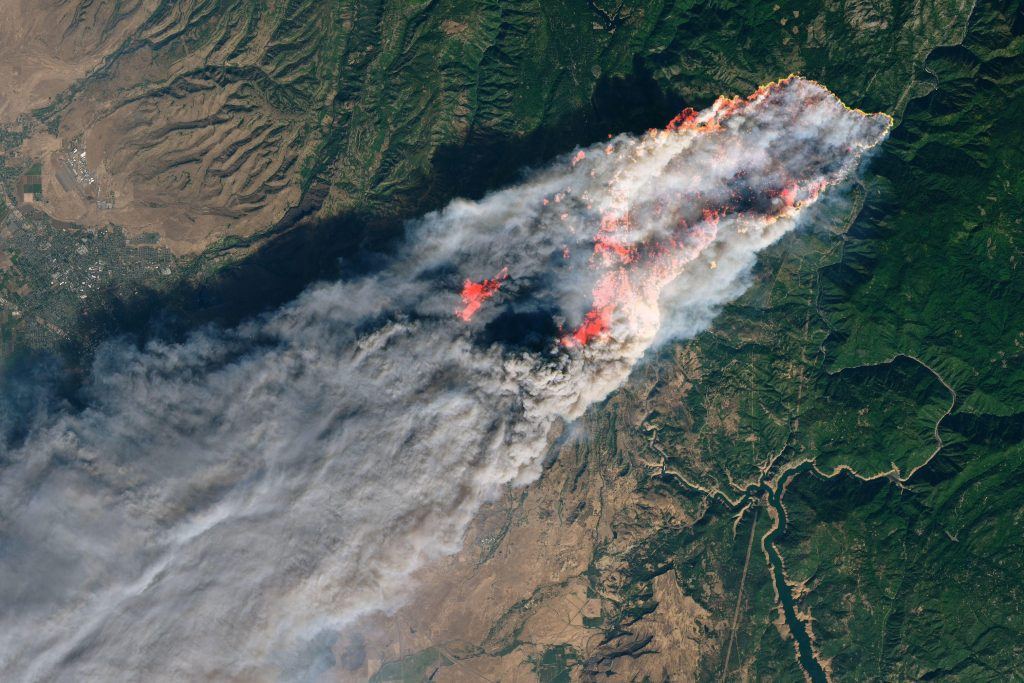
California isn't the only Western state watching fire seasons stretch longer and burn hotter. Washington now faces serious wildfire seasons of its own — and across the Pacific Northwest, land managers, fire departments, and grazing operators are turning to an old tool for a modern problem: goats. Here's the Washington fire picture, and how targeted grazing reduces the brush and grasses that feed these fires.
The scale of Washington's fire seasons
Washington's fire seasons have grown. In 2024, roughly 1,800 fires burned about 300,000 acres across federal, state, tribal, and private land in the state. The single largest forest fire that year, the Retreat Fire, burned more than 21,000 acres. On lands under the jurisdiction of the Washington Department of Natural Resources (DNR) specifically, 2024 saw 868 fires and 135,762 acres.
The 2025 season kept the pressure on. DNR-jurisdiction lands recorded 1,162 fires and 89,168 acres, while across all agencies — federal, state, and tribal — Washington logged 1,945 incidents burning about 243,769 acres. Notable 2025 fires included Lower Sugarloaf, Labor Mountain, Rattlesnake, and Bear Gulch, and a lightning complex in Stevens County (Crown Creek plus Blackhawk Mountain) that burned more than 14,000 acres.
There is encouraging news in those numbers: DNR and its partners contained 94.2% of fires at under 10 acres in 2025, a reminder that early detection and fuel reduction genuinely change outcomes. Eastern Washington and the eastern Cascade slopes remain especially fire-prone, driven by drought-stressed fuels that ignite easily and carry flames fast.
Goats are already on the job in Washington
Targeted grazing is not a hypothetical here — it's already part of the Pacific Northwest's fire-mitigation toolkit. A Pierce County fire station deployed a herd of goats as "fuel mitigation specialists" to clear thick vegetation around the station and a retention pond, freeing firefighters from weed-whacking so crews could train and respond instead.
In north-central Washington, "Billy's Goats" targeted-grazing has cleared wildfire fuel on the hillsides behind the Broadview neighborhood in Wenatchee. Near Spokane, "Healing Hooves" — run by Craig Madsen out of Edwall, Washington — is a longtime targeted goat-grazing service. Even the state itself has weighed in: WA DNR has published on targeted grazing as a fire-prevention practice.
How grazing actually reduces fire risk
The mechanism is simple. Goats graze down fine fuels — grasses and weeds — and ladder fuels — the brush and low branches that let a ground fire climb into tree canopies. Remove that continuous bed of flammable material and a fire has less to carry it toward homes, roads, and forest.
Grazing shines on ground that defeats other methods. Targeted grazing works best on areas of roughly 10 to 100-plus acres and on steep or hard-to-access terrain where mowers and weed-eaters struggle or simply can't operate safely. And unlike machines or chemicals, grazing is nearly carbon-neutral, nontoxic, and nonpolluting — the goats consume the fuel on site and leave nothing to haul away.
Targeted grazing works best when it's repeated seasonally and combined with mechanical work and structure hardening — one layer in a defensible-space plan, not a stand-alone fix.
The honest limits
Being straight about this matters. Goats don't remove trees or stumps, they don't create bare mineral soil, and they can't make anything "fireproof." Vegetation grows back, so grazing is a seasonal, repeatable tool rather than a one-time cure. The right way to think about it: grazing is a strong first pass and ongoing maintenance tool that fits inside a broader defensible-space plan, most effective alongside mechanical work and hardening the structures themselves.
The bottom line
Washington's fire seasons are here to stay, and the fuels that drive them — dry grasses, weeds, and brush on steep terrain — are exactly what targeted goat grazing goes after. It won't prevent wildfires on its own, but as one research-backed, chemical-free tool within a complete fire-prevention plan, grazing has earned its place across the Pacific Northwest.
Sources
- WA DNR — Current wildfire incident information & fire statistics
- Wikipedia — 2025 Washington wildfires
- FOX 13 Seattle — "Fuel mitigation specialists": Pierce County goats and wildfires
- WA DNR blog — Get Your Goat: a closer look at targeted grazing for fire prevention
- iForest (2014) — Goat grazing as a wildfire prevention tool: a basic review
Get ahead of fire season
Talk to a real person about your property and get a free estimate over the phone — we serve properties across California and generally require about a 5-acre minimum per project.
Call 1-858-751-GOATSee how it works