
What to expect: a goat grazing project, step by step
Thinking about hiring goats but not sure what you’re signing up for? Here’s the whole process, start to finish, with no surprises.
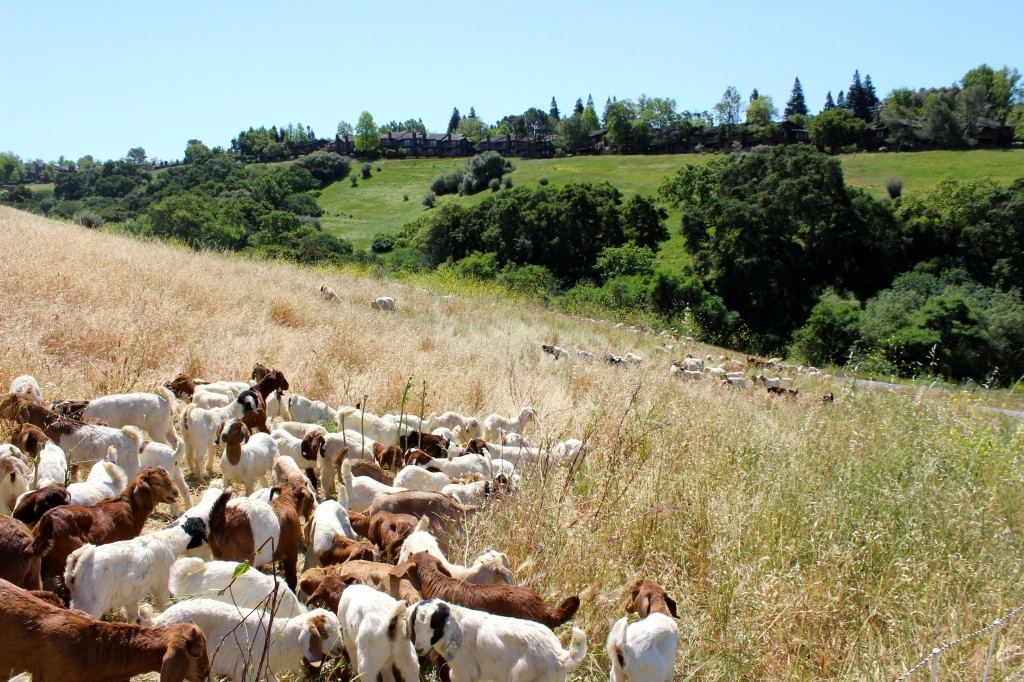
Hiring a herd of goats to clear your land sounds novel — and it is — but the project itself is refreshingly ordinary once you know the shape of it. There's no mystery, no fine print surprises, and no heavy machinery churning up your property. Here's exactly what happens, from the first message you send us to the day the goats head home, so you know precisely what you're signing up for.
A couple of things worth knowing up front: we generally require about a 5-acre minimum per project to keep transportation costs and emissions reasonable, and peak season runs roughly March through July — so if you're aiming for spring or early summer, it pays to book early. Pricing is quoted per project rather than by a fixed rate, because every site is different; you can read what drives the number in our guide to what affects cost.
With that out of the way, here's the full walk-through.
Estimate request
Send your property address, approximate acreage, photos, and timeline through the estimate form or by phone. Photos of the vegetation and terrain help us build an accurate quote faster.
Site review
We review vegetation type and density, slope, trailer access, water availability, and any plants the herd should avoid. For larger or more complex projects we may include a walk-through of the site.
Herd planning
We match the herd size to the job. As a rule of thumb, about 450 goats clear roughly an acre of brush per day, so herd size and project duration are planned together to hit your timeline.
Temporary fencing
The crew installs high-grade temporary electric fencing. It keeps the herd focused on the target area and protects the goats from predators like coyotes. It all comes down at the end of the project.
Water & access
A water source on or near the site keeps the herd healthy. If none is available, tell us in the estimate request so we can plan around it. We also confirm gate and trailer access before arrival.
Grazing period
The goats work under the supervision of professional herders, with guard dogs protecting the herd. Because the goats eat the vegetation, there is typically no cut brush to haul away and no dump fees.
Pickup & follow-up
When the target area is grazed down, the crew collects the herd and fencing. We walk the results with you and flag anything that could use follow-up attention.
Maintenance options
Vegetation grows back, so many customers schedule seasonal return visits — especially before fire season — to keep growth in check year after year.
Why the process looks this way
Every step above exists to remove a variable before the goats ever arrive. The estimate request and site review are about getting an honest read on your land — the denser the brush and the steeper the slope, the more it shapes herd size and timeline. Sharing clear photos of the vegetation and terrain early on is the single easiest way to speed up an accurate quote, because it lets us plan around the real conditions instead of guessing.
Herd planning is where the timeline gets locked in. That rule of thumb — about 450 goats clearing roughly an acre of brush a day — is a starting point we scale up or down to match your acreage and the window you need. A smaller herd over more days or a larger herd over fewer: either can work, and we plan the two together so the finish date lands where you need it.
The temporary electric fencing does two jobs at once. It keeps the herd concentrated on the exact area you want cleared, so the goats aren't wandering onto a neighbor's slope or a stretch you'd rather leave alone, and it forms a protective barrier against predators like coyotes. It's high-grade gear, it's installed by the crew, and every foot of it comes back down when the project wraps — you're not left with anything to dismantle.
Water and access are the quiet logistics that make everything else run smoothly. A water source on or near the site keeps the herd healthy through the grazing period; if you don't have one, that's fine — just flag it in your estimate request and we'll plan around it. We also confirm gate and trailer access before the goats arrive, so nothing gets held up on day one.
During the grazing period
Once the goats are on site, the work is supervised throughout. Professional herders manage the herd and guard dogs stay with the animals to protect them. One of the most satisfying parts for most customers is what doesn't happen: because the goats actually eat the vegetation, there's typically no pile of cut brush to haul away and no dump fees at the end. The material leaves the property the way it came in — inside the goats.
When the target area is grazed down, the crew collects the herd and the fencing and walks the finished results with you. If there's a patch that could use a follow-up pass or a spot worth keeping an eye on, we'll point it out then rather than leaving you to discover it later.
After the goats leave
Grazing is a living process, not a one-and-done treatment. Vegetation grows back — that's simply how brush works — which is why many customers schedule seasonal return visits, especially heading into fire season, to keep new growth from getting ahead of them. Think of the first project as the reset and the maintenance visits as the upkeep that holds the line year after year.
That's the whole arc: request an estimate, we review the site, we plan and size the herd, the crew fences and confirms access, the goats graze under supervision, and then it all packs up and we walk the results together. No surprises, no machinery, and no brush left behind to deal with.
Sources
- Rent A Goat — Frequently asked questions
- NPR (2023) — How goat grazing helps fight California wildfires
Ready to clear your property naturally?
Talk to a real person about your property and get a free estimate over the phone — we serve properties across California and generally require about a 5-acre minimum per project.
Call 1-858-751-GOATSee how it works